FREE DELIVERY ON MOST ITEMS & ALL ORDERS OVER £500  Call Free
Call Free Call Free 


So, you’re ready to up your coffee game and need the perfect grinder to match your morning ritual. Whether you’re after the bold richness of an espresso or the smoothness of a French press, choosing the right coffee grinder makes all the difference.
With so many models out there—from high-precision burr grinders to budget-friendly all-rounders—it can be tricky to know where to start. But don’t worry—we’ve done the hard work for you.
In this guide, we’ve reviewed and tested a range of coffee grinders to help you find the best one for your needs. We focused on grind consistency, ease of use, versatility, noise levels, and overall value to bring you our top picks.
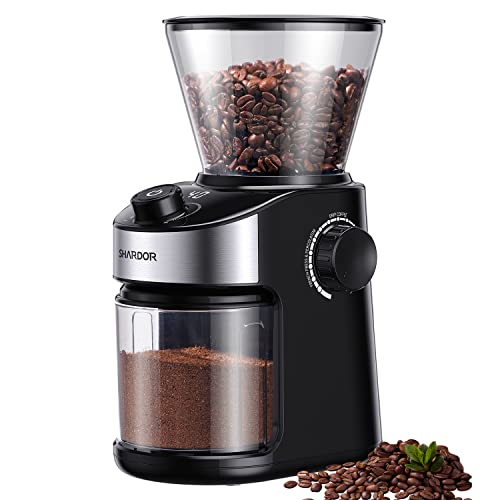
Leading the pack is the SHARDOR Coffee Grinder Burr Electric, which won our Editor’s Pick thanks to its 25 precision settings, sleek compact build, and impressive performance across multiple brew styles.
Need something more versatile? The Andrew James Electric Grinder doubles as a spice and nut grinder without compromising on coffee quality. For those on a tighter budget, the KYG Electric Grinder impressed us with its quiet motor and reliable results.
And if you want to know which model to steer clear of? We’ve got that covered too. Read on to find the best coffee grinder for your perfect brew.
When shopping for a quality coffee grinder, there are baseline expectations that every worthwhile model should meet. These ensure a consistent and enjoyable coffee-making experience, whether you're a beginner or a seasoned home barista.
A coffee grinder should not only function well but also feel well-constructed and fit seamlessly into your kitchen environment. Design and build quality go a long way in ensuring long-term satisfaction.
Some coffee grinders go the extra mile with bonus features that elevate user experience, convenience, and performance. These aren’t always necessary but can offer strong value depending on your needs.
By keeping these factors in mind, you’ll be better equipped to choose a grinder that delivers on both function and form—enhancing your daily brew without any compromises.
The SHARDOR Coffee Espresso Grinder Burr Electric is a compact, precise, and easy-to-use grinder that’s ideal for home coffee lovers. With 25 grind settings, a digital timer, and a uniform flat burr system, it lets you customise your coffee exactly how you like it—without taking up too much kitchen space.
We recently tested the SHARDOR Coffee Grinder and were impressed by its intuitive setup and precise control. Adjusting the grind size and time was straightforward, and the flat burr system delivered consistent grounds that brought out rich flavours in every cup.
Whether we brewed a smooth cafetière or a sharp espresso, the taste was noticeably fresher than pre-ground coffee. The compact design made it a seamless fit on our worktop, and its relatively quiet operation was a pleasant surprise.
Cleanup was hassle-free thanks to the removable parts and included brush. We particularly appreciated the 40-second digital timer, which gave us just the right amount of control for different brew styles and batch sizes.
For anyone looking to improve their daily coffee experience at home, this grinder strikes the right balance between functionality, quality, and ease of use. It’s now a permanent part of our morning routine.
The Andrew James Electric Coffee Grinder is a great choice if you want a bit more from your kitchen kit. It’s compact but powerful, with the added bonus of grinding spices and nuts alongside coffee beans. Ideal for daily use, it blends speed, safety, and smart design in one reliable unit.
We used the Andrew James grinder daily for our morning brew and were pleased with the consistent results. It handled enough beans for a 4-cup cafetière in about 20 seconds and also worked well with spices. The stainless steel blade delivered quick, even grinds with no overheating.
Its compact size made it perfect for smaller kitchens, and the safety-lock lid gave us peace of mind. Cleaning was simple thanks to the included brush, and the stylish finish meant we didn’t mind leaving it out on the counter.
We did note that it needs to rest for a few minutes after 30 seconds of use, but that wasn’t a major drawback for us. Removing grounds carefully is important too, as the on/off switch sits in the chamber.
If you're looking for a reliable all-round grinder with added features, this is a solid second-best for home use.
The KYG Electric Budget Coffee Grinder is a compact, versatile tool ideal for everyday coffee lovers. We found it reliable, easy to use, and surprisingly quiet for its price point. It’s a solid entry-level grinder that performs well across coffee beans, nuts, and spices.
We recently put the KYG Electric Coffee Grinder through its paces in our kitchen. Setup was as simple as plugging it in, adding beans, and holding the button down for under 20 seconds to get a smooth grind. We liked how it handled everything from espresso to coarse French press grinds with no trouble.
It also ground dry spices and nuts well, adding real versatility. The compact shape fit neatly on the counter, and its quieter motor was a noticeable plus during early mornings. Cleaning took only a moment using the included brush.
While the lid alignment took a few tries to get right and the power cable was shorter than ideal, these were small trade-offs. For the price, it's a practical, no-frills solution. If you’re starting to explore home coffee brewing, this is one of the best electric coffeegrinders that covers the basics—and then some.
The KRUPS Coffee Mill and Spice Grinder is our go-to pick for anyone wanting a simple, reliable grinder at home. With one-touch operation, a compact design, and customisable grind control, it delivers consistent results every time—ideal for busy mornings and low-maintenance brewing.
We tested the KRUPS grinder over several weeks and found it dependable, fast, and refreshingly easy to use. With no complicated settings to sift through, we could grind beans to our preferred texture within seconds.
Whether we wanted a coarse grind for French press or a finer blend for espresso, adjusting the grind was straightforward—just press and hold.
Its versatility stood out. We tried it with spices and even nuts, and it performed well across the board. The compact shape means it doesn’t dominate counter space, and the safety lid gives peace of mind when in use. Cleaning was hassle-free too—just a quick wipe and it’s ready again.
For anyone looking for a straightforward grinder that’s also reliable and multifunctional, this one is a smart, low-effort choice.
The Olkezz Manual Coffee Grinder offers impressive grind control, ergonomic design, and consistent results in a compact form. With precision engineering and user-friendly features, it’s ideal for coffee lovers who want to refine their brew at home without relying on electricity.
We tested the Olkezz grinder across a range of brewing methods and were impressed by its consistency and ease of use. Adjusting the grind size was simple and reliable. The grinder’s smooth rotation and sturdy build made the process feel controlled and efficient, even with coarser settings.
Its compact, elegant shape made it easy to handle and store, and the large-capacity bin meant fewer refills during brewing. We especially appreciated how the ceramic core stayed cool, protecting the flavour of the beans, even during longer grinds.
While it does take some effort and a minute or two per use, the results are well worth it. For those who enjoy the hands-on brewing process and want quality, control, and a touch of craftsmanship in their kitchen, the Olkezz stands out as the best manual grinder we’ve used.
We tested the VECH Cordless Electric Burr Coffee Grinder hoping for a reliable, space-saving option for everyday brewing. While there are some convenient features—like cordless operation, quick USB charging, and a compact, travel-friendly design—the drawbacks quickly outweighed the positives.
At first glance, its small footprint and enclosed grind bin seemed practical. It’s easy to carry, and the one-touch button made it straightforward to operate. However, the more we used it, the more its flaws became apparent.
The battery is by far the biggest issue. It doesn’t hold charge well, and worse still, you can’t use the grinder while it’s plugged in. That alone makes it unreliable for anything beyond casual use.
Grind consistency is another letdown. It claims to offer five grind settings, but the results vary widely—especially at coarser levels. Even on the finest setting, it struggles to produce a grind fine enough for proper espresso.
Build quality is also underwhelming (mostly plastic), and the grind adjustment isn’t clearly marked, making it frustrating to dial in.
Despite its convenience and portability, this is not a product we’d recommend. It simply doesn’t hold up to regular use. For us, it’s one to avoid—especially if you care about grind quality or long-term reliability.
Choosing the best coffee grinder takes more than flipping a switch and brewing a cup. We went deeper, focusing on the features that truly matter to home brewers—like consistency, ease of use, noise levels, and flavour. Here’s how we did it:
The foundation of a good grinder is its ability to produce consistent coffee grounds. We tested each model using a range of grind sizes—from coarse for French press, to medium for drip, and fine for espresso. We visually inspected the grounds and used sieving methods to gauge uniformity.
By brewing coffee at each setting, we could detect flaws in grind consistency that impacted taste, such as bitterness or sourness.
Speed without sacrificing quality is a must. We timed how long it took to grind enough beans for a standard single or double shot, noting how well each machine handled larger batches. If motors showed signs of strain or overheating, it raised red flags about long-term performance.
We evaluated how intuitive each grinder was to operate. Were the grind settings clearly marked? Was the hopper easy to load? We also looked at how smoothly timers and controls worked. The goal was to find machines that anyone could use confidently, without fuss or frequent reference to a manual.
Coffee grinding can be loud—but it doesn’t have to be disruptive. We listened closely during operation, comparing relative noise levels and identifying grinders that operated smoothly without excessive rattling or vibration.
A clean grinder equals better-tasting coffee. We checked whether essential parts like ceramic burrs, chambers, and lids were easy to remove and clean. Models that came with brushes or easy-access components scored higher. We also paid attention to how much coffee residue was left behind after use.
We handled each grinder to assess the sturdiness of its construction, paying attention to the materials used—plastic, stainless steel, or metal alloys. We ran repeated grinding cycles to simulate extended use, checking for overheating, wear, or operational decline.
Ultimately, the true test is in the flavour. We brewed coffee using the same beans across all grinders and prepared it through various methods, including pour-over, French press, and espresso. This allowed us to compare the clarity, aroma, and overall balance of each cup.
Finally, we compared features like digital timers, grind counters, and adjustable settings against the price point. We factored in capacity, design extras, and warranty coverage to determine whether each grinder offered good value for its cost.
Yes, it is worth getting a coffee grinder. Freshly ground coffee retains more of its natural oils and aromas, resulting in a richer and more flavourful cup. Using a grinder also gives you control over grind size, allowing you to match it with your brewing method for better consistency and taste.
The best type of grind for coffee depends on your brewing method. Coarse grind works well for French press, medium grind is ideal for drip coffee, and fine grind is suitable for espresso. Matching the grind size to the brewing method ensures optimal extraction and enhances the final flavour for your coffee machine.
Three things you should do to use a grinder safely are: always ensure the lid is securely in place before starting, avoid overloading the grinder to prevent motor strain, and unplug the machine before cleaning or removing parts. These steps help prevent accidents and prolong the life of the device.
The effective life of a coffee grinder typically ranges from 5 to 10 years, depending on build quality, frequency of use, and how well it is maintained. Regular cleaning, using it within its recommended capacity, and avoiding hard objects like unroasted beans can help extend its lifespan.
No, a blender is not better than a coffee grinder for grinding coffee. Blenders are designed for liquids and soft solids, and they often produce uneven grinds. A coffee grinder, on the other hand, is built for precision and consistency, which is crucial for achieving a balanced brew.
Yes, you should clean your coffee grinder after every use to prevent residue build-up, stale flavours, and oil accumulation. While a deep clean isn't necessary daily, brushing out leftover grounds and wiping the chamber helps maintain freshness and ensures consistent performance with each use.
Whether a manual or electric coffee grinder is better depends on your needs. Manual grinders are portable, quiet, and ideal for small batches. Electric grinders offer speed, convenience, and precision for frequent use. Choose based on how often you brew and the level of control you prefer.
Yes, you can put spices in a coffee grinder, but it’s best to use a separate grinder for this purpose. Spices can leave strong oils and aromas that linger, affecting the taste of your coffee. If using one grinder for both, clean it thoroughly between uses to avoid flavour transfer.
We hope our guide to the best coffee grinders has helped you narrow down the perfect pick for your home brewing setup. With so many great options to choose from, finding the right grinder can feel overwhelming—but we think the SHARDOR Coffee Grinder Burr Electric stands out as the clear winner.
Its precision, ease of use, and consistent performance make it a fantastic choice for coffee lovers at any level. Whether you’re pulling espresso shots or brewing French press, it delivers quality grounds every time.
Of course, all the models we reviewed offer something valuable depending on your needs and budget. But one grinder we recommend avoiding is the VECH Cordless Electric Burr Coffee Grinder.
Despite its portable design, it suffers from poor grind consistency, unreliable battery life, and underwhelming build quality—making it a frustrating choice for daily use. Tried one of these grinders already? Still deciding? Let us know your thoughts in the comments below!

Content editor, marketer and product tester. A regular contributor for the ‘Home And Garden’ and Modern Homes Magazines, now part of a close-knit team, I oversee all the content on Posh. All roads have led to this job which I love. I get to focus on my love of interior design and health and work with a fabulous team. The role brings me a good level of freedom to my family and me and keeps me productive