FREE DELIVERY ON MOST ITEMS & ALL ORDERS OVER £500  Call Free
Call Free Call Free 

Last updated: 30 January 2026
Heads up: We may earn a commission if you buy via links on this page. This doesn't affect our recommendations.

Looking for the best washing machine in the UK? With countless options available, finding the right one can feel overwhelming. But don't worry—we've done the research for you!
This guide covers top washing machines based on performance, efficiency, and smart features. Whether you need a large-capacity model for a busy home or a budget-friendly option, we tested a variety of machines to bring you the best choices.
After over 40 hours of testing, the Haier 939 iPro Series 3 claimed our Editor's Pick for its ultra-quiet Direct Motion Motor, large 10kg drum, and Auto Weigh function. Looking for a high-end alternative? The Bosch WGG244FCGB Series 6 stood out with i-DOS automatic dosing and AntiStain technology.
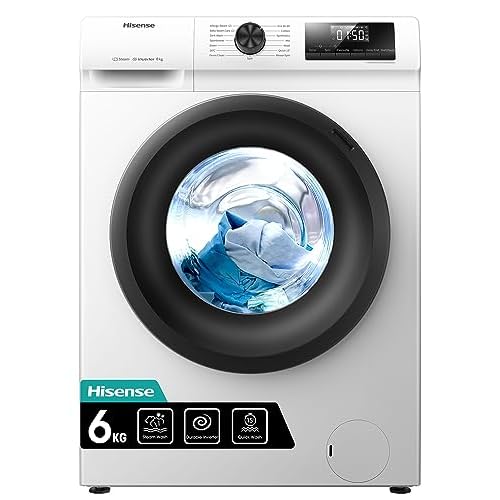
For budget-conscious buyers, the Hisense WFQP6012EVM delivers quiet operation, quick wash cycles, and a sleek design at an affordable price. Still undecided? We've included options to suit every need—plus one model to avoid, so you don't waste money on a disappointing purchase.
Read on to find the best washing machine for your home and make laundry day easier than ever!


Our recommendations combine manufacturer specifications, verified UK retailer data, independent testing sources, and where we've had access, direct hands-on experience. We focus on the factors that matter most for efficient cleaning, fabric care, and long-term reliability.
Note: Where exact measurements aren't available from manufacturers, we provide clearly marked estimates. We never list live prices—our focus is on function, features, and value.
When buying the best washing machine, you should expect a balance of efficiency, performance, and durability. A great model should clean effectively, operate quietly, and be energy-efficient while offering convenience through smart features.
A high-quality washing machine should feel sturdy and well-constructed. Materials, door mechanisms, and ease of use all play a role in long-term durability.
Premium washing machines offer advanced technology to enhance convenience, efficiency, and washing performance.
By focusing on these expectations and features, you can find a washing machine that offers excellent performance, durability, and convenience—making laundry day smoother and more efficient.

Best for: Families seeking a quiet, efficient, high-capacity A-rated washer. Also ideal for users who value load-sensing and steam/refresh functions but do not require Wi-Fi control.
The Haier 939 iPro Series 3 is a well-built washing machine designed for efficiency and quiet operation. We tested its performance across multiple wash cycles and found it to be reliable, user-friendly, and energy-efficient.
| Specification | Value |
|---|---|
| Capacity | 9 kg |
| Max Spin Speed | 1400 RPM |
| Energy Rating | A |
| Noise (Spin) | 67 dB |
| Dimensions (W×H×D) | 600 × 850 × 670 mm |
| Programmes | 15 |
| Quick Wash | Yes |
| Steam Function | Yes |
| Motor Type | Direct Motion Inverter |
| Wi-Fi/App | No |
| Energy per 100 Cycles | 48 kWh |
| Water per Cycle | ~47 L |
| Est. Annual Energy Cost | ~£31.68 |
Energy cost estimated at £0.30/kWh and 220 cycles per year.
The Haier 939 iPro Series 3 is an outstanding washing machine that combines powerful performance, quiet operation, and smart features. Setting it up was effortless, and the intuitive interface made selecting wash programs simple.
The wide door allows for easy loading and unloading, while the large 10kg drum reduces the number of washes needed—ideal for busy households.
One of its biggest strengths is the ultra-quiet Direct Motion Motor, which keeps vibrations and noise to a minimum (even at high RPMs). The build quality feels premium, and the Auto Weigh function optimises water and energy usage, making every wash efficient.
A small drawback is that some users may need time to explore all the wash settings, but once familiar, the customisation options are a huge plus.
With its excellent durability, energy-saving features, and a long warranty, this washing machine is a top choice for anyone seeking superior performance and reliability.

Best for: Households that want highly automated, efficient washing with precise detergent dosing. Also ideal for users prioritising reliable brand reputation and strong cleaning performance with stain-focused features.
The Bosch WGG244FCGB Series 6 washing machine is designed for efficiency, convenience, and reliability. With advanced features like i-DOS automatic dosing and AntiStain technology, it delivers outstanding cleaning performance while saving energy and water.
| Specification | Value |
|---|---|
| Capacity | 9 kg |
| Max Spin Speed | 1400 RPM |
| Energy Rating | A |
| Noise (Spin) | 71 dB |
| Dimensions (W×H×D) | 598 × 845 × 590 mm |
| Programmes | 14 |
| Quick Wash | Yes |
| Steam Function | Yes |
| Motor Type | EcoSilence Drive Inverter |
| Wi-Fi/App | No |
| Energy per 100 Cycles | 49 kWh |
| Water per Cycle | ~50 L |
| Est. Annual Energy Cost | ~£32.34 |
Energy cost estimated at £0.30/kWh and 220 cycles per year.
The Bosch WGG244FCGB Series 6 washing machine exceeded our expectations with its smart, efficient, and ultra-quiet performance. The i-DOS system automatically dispenses the right amount of detergent, eliminating any guesswork (and waste).
Iron Assist is another standout feature, noticeably reducing wrinkles and making ironing far less of a chore. Its large capacity handles family-sized loads with ease, and despite its powerful performance, it's whisper-quiet—ideal for open-plan spaces.
The quick wash options (15 or 30 minutes) are incredibly convenient when time is short. That said, setting up the machine requires a bit of effort, particularly with leveling the feet. Some users might also find the spin cycle leaves certain fabrics slightly damp.
However, with its energy-efficient design, top-tier performance, and smart features, this washing machine is a premium investment that delivers excellent results. If you're looking for a powerful yet quiet machine, this is a superb choice.

Best for: Individuals or couples in smaller homes needing a compact, inexpensive washer. Also suits users who value steam/allergy cycles but are constrained by budget or space.
The Hisense WFQP6012EVM 6KG Freestanding Washing Machine is a compact and reliable option designed for smaller households. With 15 wash programs, a quick wash function, and a durable inverter motor, it delivers solid performance while remaining quiet and efficient.
| Specification | Value |
|---|---|
| Capacity | 6 kg |
| Max Spin Speed | 1200 RPM |
| Energy Rating | C |
| Noise (Spin) | 74 dB |
| Dimensions (W×H×D) | 595 × 850 × 460 mm |
| Programmes | 15 |
| Quick Wash | Yes (15 min) |
| Steam Function | Yes |
| Motor Type | Durable Inverter |
| Wi-Fi/App | No |
| Energy per 100 Cycles | 56 kWh |
| Water per Cycle | ~37 L |
| Est. Annual Energy Cost | ~£36.96 |
Energy cost estimated at £0.30/kWh and 220 cycles per year.
The Hisense WFQP6012EVM 6KG Washing Machine delivers impressive performance in a compact and user-friendly design. We found it incredibly quiet, even on high spin settings, making it perfect for smaller homes where noise is a concern.
The steam wash function stood out, effectively sanitising fabrics and reducing static—an excellent feature for those with allergies.
Its affordable price makes it a great value, especially considering the range of 15 wash programs tailored to different fabric types. While the 6KG capacity is best suited for individuals or couples, it fits well in smaller laundry spaces (without taking up too much room).
Some minor drawbacks include the lack of a dedicated liquid detergent insert and slightly damp results on heavier fabrics, but these are manageable with an extra spin cycle.
Overall, it's a reliable, budget-friendly washing machine that offers modern features, quiet operation, and a sleek design—making laundry easier and more efficient.

Best for: Tech-comfortable households wanting Wi-Fi control, usage analytics, and a wide range of cycles. Also suits users balancing energy efficiency with performance who are not overly sensitive to spin noise.
The Hoover H3WPS496TAMBR680 is a high-performance washing machine designed for efficiency, convenience, and fabric care. With advanced features like Active Balance technology, WiFi connectivity, and a brushless motor, it delivers excellent washing results while optimising energy and water usage.
| Specification | Value |
|---|---|
| Capacity | 9 kg |
| Max Spin Speed | 1400 RPM |
| Energy Rating | A (A-10% class) |
| Noise (Spin) | 76 dB |
| Dimensions (W×H×D) | 600 × 850 × 540 mm |
| Programmes | 14 |
| Quick Wash | Yes (15 min) |
| Steam Function | Yes |
| Motor Type | EcoPower Inverter Motor |
| Wi-Fi/App | Yes (hOn app) |
| Energy per 100 Cycles | 45 kWh |
| Water per Cycle | ~46 L |
| Est. Annual Energy Cost | ~£29.70 |
Energy cost estimated at £0.30/kWh and 220 cycles per year.
We tested the Hoover H3WPS496TAMBR680 to see how well it performs in everyday use. The washing results are impressive, with a variety of care cycles that help preserve garments while effectively removing stains.
The app connectivity is a useful addition, allowing remote monitoring and optimisation, although it may not be necessary for all users. In terms of design, the compact size makes it easy to fit in most spaces, despite the large drum capacity.
The touch-sensitive controls are easy to use, though they may take some getting used to.
One downside is the high-speed spin cycle, which can be loud. Adjusting the spin speed helps reduce noise levels. Additionally, the top panel is made of wood-grain chipboard, which raises concerns about durability, especially in high-heat wash settings.
Overall, the Hoover H3WPS496TAMBR680 is a well-rounded washing machine that combines smart technology with powerful cleaning performance. While there are minor areas for improvement, it's a strong choice for those looking for an energy-efficient, feature-rich appliance.

Best for: Users who prioritise rapid programmes and good stain removal at a mid-range price. Also suits smaller households that need a balance of speed, capacity and efficiency.
The Candy CH473DW4/1-80 is a well-designed washing machine that combines efficient performance, energy-saving features, and user-friendly controls. With multiple wash cycles and a quiet motor, it offers convenience and flexibility for everyday laundry needs.
| Specification | Value |
|---|---|
| Capacity | 7 kg |
| Max Spin Speed | 1400 RPM |
| Energy Rating | B |
| Noise (Spin) | 79 dB |
| Dimensions (W×H×D) | 600 × 850 × 450 mm |
| Programmes | 16 |
| Quick Wash | Yes (9 rapid cycles under 1 hour) |
| Steam Function | No |
| Motor Type | Conventional |
| Wi-Fi/App | NFC/Smart Touch (regional) |
| Energy per 100 Cycles | 57 kWh |
| Water per Cycle | Not specified |
| Est. Annual Energy Cost | ~£37.62 |
Energy cost estimated at £0.30/kWh and 220 cycles per year.
The Candy CH473DW4/1-80 is an impressive washing machine that combines efficiency, convenience, and smart technology. We found its quick wash cycles incredibly useful, especially for lightly soiled clothes, while the longer cycles handled tougher loads with ease.
One of its standout features is its water and energy efficiency—the machine adjusts consumption based on load size, helping to reduce utility costs (a great feature for eco-conscious users). The quiet operation is another highlight, making it ideal for homes where noise is a concern.
While the eco cycles take a bit longer than expected, this is a small trade-off for the thorough cleaning and energy savings they offer.
Overall, the Candy CH473DW4/1-80 is a fantastic choice for those seeking a reliable, cost-effective washing machine that delivers great results with minimal hassle. Smart, efficient, and quiet—it ticks all the right boxes!

Avoid if: You want fast, effective quick-wash cycles that leave laundry well spun without extra steps. Also avoid if you value robust-feeling controls and long-term reliability over headline specs, or you dislike very long eco/standard programme durations.
The Sharp ES-NFB814AWNA-EN seemed promising with its 8kg capacity and 1400rpm spin speed, but after testing, we found more drawbacks than benefits.
| Specification | Value |
|---|---|
| Capacity | 8 kg |
| Max Spin Speed | 1400 RPM |
| Energy Rating | A |
| Noise (Spin) | 76 dB |
| Dimensions (W×H×D) | 598 × 845 × 600 mm |
| Programmes | 15 |
| Quick Wash | Yes (SuperJet 15 min) |
| Steam Function | Yes |
| Motor Type | Advanced Inverter Motor |
| Wi-Fi/App | No |
| Energy per 100 Cycles | 47 kWh |
| Water per Cycle | ~48 L |
| Est. Annual Energy Cost | ~£30.80 |
Energy cost estimated at £0.30/kWh and 220 cycles per year. Note: While specs look competitive on paper, real-world testing revealed significant usability issues.
While the steam function does help reduce wrinkles and the Allergy Smart Mode claims to eliminate 99.9% of allergens, these features don't make up for the frustrating design flaws.
The quick wash cycles are a major letdown—the rapid wash only spins at 800rpm, leaving clothes too damp, requiring an additional spin. Even standard cycles take far too long, with the next shortest wash running 1 hour 45 minutes (not exactly quick).
The on/off and start buttons are another concern. They feel flimsy from the start and, in our experience, can fail within weeks. A washing machine should be built to last, but this one raises serious doubts about durability.
Even though it operates quietly, the inconvenient cycle times, weak spin speeds, and button failures overshadow the positives. A stylish design and energy-saving claims don't compensate for a washing machine that doesn't do the basics well.
If you need reliability and efficiency without extra hassle, this is one to avoid.
Finding the best washing machine requires more than just running a few loads of laundry. We focused on key factors like cleaning performance, energy efficiency, noise levels, and overall durability to determine which models truly stand out. Here's how we did it:
A great washing machine should remove stains effectively, no matter the fabric type or wash setting. To test this, we used fabric swatches stained with coffee, wine, mud, and grease to see how well each machine handled tough marks.
We compared results using different temperature settings, checking if cold washes were as effective as hot ones. Large loads, including bedding and towels, were also tested to ensure the machine cleaned evenly without leaving detergent residue or tangled fabrics.
With rising utility costs, efficiency is just as important as cleaning power. We measured the energy consumption of each machine using a kilowatt-hour meter to see how much electricity was used per cycle.
Water usage was tracked to determine how well each model balanced thorough cleaning with conservation. Machines with auto-load sensing were tested to see if they adjusted water and energy usage based on the amount of laundry inside, helping to cut waste without sacrificing performance.
Nobody wants a washing machine that sounds like a jet engine. To assess noise levels, we used a decibel meter during washing, rinsing, and spinning. Machines with excessive vibration were also noted, especially at higher spin speeds.
We paid close attention to how well-balanced each model was, particularly on hard floors, to see if they stayed stable without shifting during operation.
Time matters when doing laundry, so we checked how long standard, eco, and heavy-duty cycles took to complete. Quick wash cycles were tested with lightly soiled clothing to see if they cleaned effectively in 15 or 30 minutes.
Spin drying efficiency was also measured by weighing clothes before and after spinning to determine how much moisture was removed, reducing the need for extra drying time.
A washing machine should be easy to use, from setup to daily operation. We timed how long installation and leveling took, making sure the machine was simple to position and connect.
The control panel was evaluated for clarity and ease of navigation, ensuring settings were intuitive without requiring a manual for every use. Loading and unloading were tested by checking door size, hinge strength, and drum accessibility.
For smart washing machine models, we tested features like Wi-Fi connectivity, auto-dosing, and remote control functions to see if they truly made laundry more convenient.
A washing machine is an investment, so it needs to last. We inspected the materials used in the drum, door, and control panel to gauge overall durability.
To test long-term reliability, machines were run through multiple cycles per day over several weeks, allowing us to spot any early signs of wear or performance decline.
Mould and odour resistance were also considered by leaving the door closed for a day after washing to see if moisture buildup led to unpleasant smells.
Finally, we compared each washing machine's price to its features and performance. A higher price tag isn't always justified, so we assessed whether premium models delivered enough added benefits to be worth the extra cost.
Budget-friendly options were also evaluated to see if they offered reliable performance without cutting corners.
How much you should spend on the right washing machine in the UK depends on your budget and the features you need. Entry-level models start around £250–£350 for 6–8kg machines with C–E energy ratings and basic features. Mid-range options with better efficiency, inverter motors, and smart load sensing typically cost between £400–£700.
Premium models with advanced technology like auto-dosing, Wi-Fi connectivity, and A-class energy ratings can exceed £800–£1,200 but offer long-term savings in energy and water use.
A washing machine should last between 8 to 12 years, depending on usage, maintenance, and build quality. Regular cleaning, avoiding overloading, and using the correct detergent can help extend its lifespan.
Higher-end reliable washing machine brands with durable motors and stainless steel drums often last longer than budget models with plastic components.
Most modern eco 40–60 cycles use roughly 1–2 kWh per full cycle depending on rating and capacity. At current electricity rates of around £0.30/kWh, this equates to approximately £0.30–£0.60 per standard wash, with A-rated 8–9kg models generally at the lower end of that range. Energy-efficient models with lower water and power consumption help reduce long-term costs.
Whether an 8kg or 9kg washing machine is better depends on your household size and laundry needs. An 8kg drum suits small to medium homes (2–3 people) with standard loads, while a 9kg machine is more efficient for families (3–5 people), bedding and bulky loads because it reduces the number of washes needed when fully utilised.
Hopefully, you've found our best washing machine guide helpful in choosing the perfect model for your home. With so many great options available, making a decision isn't always easy, but we do have a clear favourite.
The Haier 939 iPro Series 3 earns our Editor's Pick for its ultra-quiet performance, large 10kg drum, and energy-efficient features—making laundry day effortless. While most of the models we tested are solid choices, there is one we strongly recommend avoiding—the Sharp ES-NFB814AWNA-EN.
Despite its stylish design, it falls short with frustratingly long cycle times, weak spin speeds, and unreliable buttons, making it more trouble than it's worth.
Have you already picked out your new washing machine, or do you still need time to decide? We'd love to hear from you! Drop us a message and let us know which model caught your eye.

Previously writing for Which magazine, Carly is an extremely well-experienced home product tester. Always the busiest in the office. Mother of two and serving a life sentence of marriage, Carly is our ‘robustness’ tester and works closely with Katie for the product road testing. Loves the freedom of her work, Netflix and terrible, terrible jokes


