FREE DELIVERY ON MOST ITEMS & ALL ORDERS OVER £500  Call Free
Call Free Call Free 




Last updated: 18 November 2025
Heads up: We may earn a commission if you buy via links on this page. This doesn't affect our recommendations.

Looking for the best reciprocating saw but unsure where to start? With countless options, choosing the right one can be tricky. No worries—we've got you covered! We tested the top models, considering cutting power, ease of use, battery life, and value to help you find the perfect fit.
Our Editor's Pick, the Bosch PSA 700 E Reciprocating Saw, delivers 710W of power, an ergonomic grip, and tool-free blade changes, making it ideal for DIYers handling wood, metal, or pruning tasks.
Prefer cordless? The HYCHIKA 18V Brushless Reciprocating Saw impressed with adjustable speed, long battery life, and a safety switch for precision cutting. On a budget? The WORKPRO 710W Reciprocating Saw balances power and affordability, offering excellent performance for the price.
However, not all saws are worth your money. The CONENTOOL 21V Reciprocating Saw disappointed with weak batteries and poor-quality blades, making it unreliable for serious tasks.
Whether for renovations, demolition, or garden work, our guide has something for every need and budget. Read on to discover the best reciprocating saw for your next project!

Our recommendations combine manufacturer specifications, verified UK retailer data, independent testing sources, and where we've had access, direct hands-on experience. We focus on the factors that matter most for cutting performance, reliability, and user comfort.
Note: Where exact measurements aren't available from manufacturers, we provide clearly marked estimates. We never list live prices—our focus is on function, features, and value.
When choosing a reciprocating saw, certain features should be a given—standard elements that ensure reliability, efficiency, and ease of use. Here's what to expect from a quality model:
A well-designed reciprocating saw should be sturdy, balanced, and comfortable to use. Key aspects to consider include:
Some saws go beyond the basics, offering additional features that enhance usability and performance. While not essential, these extras can make a significant difference:
By prioritising these key features, you can ensure you're investing in a high-performance, durable, and user-friendly reciprocating saw suited to your needs.

Best for: DIY enthusiasts and homeowners seeking a reliable corded reciprocating saw with professional-grade features for renovation work, garden pruning, and general cutting tasks. The Bosch PSA 700 E combines trusted German engineering with user-friendly design, making it ideal for those who value consistent power without battery concerns.
The Bosch PSA 700 E reciprocating saw offers the perfect balance between power and ease of use for demanding DIY projects. With its 710W motor, this tool handles a variety of tasks efficiently, whether you're pruning branches, cutting wood, or working on small renovation jobs.
| Specification | Value |
|---|---|
| Motor Power | 710W |
| Voltage | 240V |
| Type | Corded Electric |
| Variable Speed | 0-2700 SPM |
| Stroke Length | 20mm |
| Cutting Depth (Wood) | 150mm |
| Cutting Depth (Steel) | 10mm |
| Cutting Depth (Pipe) | 115mm |
| Weight | 3.0kg |
| Blade Compatibility | Universal S-shank (SDS system) |
| Warranty | 2 years (3 years if registered) |
The Bosch Home And Garden Reciprocating Saw PSA 700 E reciprocating saw is a versatile and reliable tool that impressed us during testing. Its 710W motor delivers excellent power, effortlessly handling materials like branches, pallets, and construction wood.
We found the tool-free blade-changing system particularly convenient, making it easy to switch between tasks (no additional tools needed). The ergonomic design, including a soft-grip handle and stable 3 kg weight, ensures comfort and safety during use.
While the weight provides stability, it does require a firm grip to manage vibrations effectively. It's best used with a light touch to achieve smooth, precise cuts. For heavier tasks, a chainsaw might be faster, but this saw excels where precision and safety are priorities.
Overall, the Bosch PSA 700 E is an excellent choice for DIY enthusiasts. Whether you're pruning, renovating, or tackling small-scale projects, this saw is a dependable and versatile companion for home and garden use.

Best for: DIYers and tradespeople who need cordless freedom for outdoor projects, remote work sites, or locations without convenient power access. The HYCHIKA's brushless motor technology and dual battery setup make it particularly suited for extended cutting sessions where consistent performance matters more than brand recognition.
The HYCHIKA Cordless Reciprocating Saw, 18V Brushless Electric Saw, is a versatile and reliable tool designed for DIY enthusiasts and professionals alike. We tested this saw extensively, and here's why it stands out.
| Specification | Value |
|---|---|
| Motor Power | 18V Brushless |
| Voltage | 18V |
| Type | Cordless (Battery) |
| Variable Speed | 0-2800 SPM |
| Stroke Length | 22mm |
| Battery | 18V 2x 2.0Ah Li-Ion |
| Blade Compatibility | Universal reciprocating saw blades |
| Key Features | Brushless motor, LED work light, Safety switch lock |
Runtime varies by material; approximately 1-2 hours per battery depending on cutting intensity.
The HYCHIKA Cordless Reciprocating Saw is a powerful and versatile cordless tool, perfect for DIYers and professionals. We tested it thoroughly, and it impressed us with its adjustable speed (0-2800SPM) and four cutting depths, allowing precision in different tasks.
The tool-free blade change made swapping between wood and metal cutting effortless. Its safety switch and LED light add extra convenience, especially in dim areas. The rubber grip minimises fatigue, making it comfortable to use for extended periods.
The two 2000mAh batteries and fast charger ensure continuous operation, a major plus. However, we noticed that securing materials properly is key to minimising vibrations, and a storage case would have been a great addition.
That said, its lightweight yet sturdy build and impressive performance outweigh these minor drawbacks. For its price, this saw delivers excellent value, reliability, and efficiency, making it a great investment for any toolbox.

Best for: Budget-conscious DIYers and occasional users who need a capable reciprocating saw without premium pricing. The WORKPRO offers excellent entry-level value with included blades and essential features, making it ideal for home improvement projects, garden maintenance, and light renovation work where corded power is acceptable.
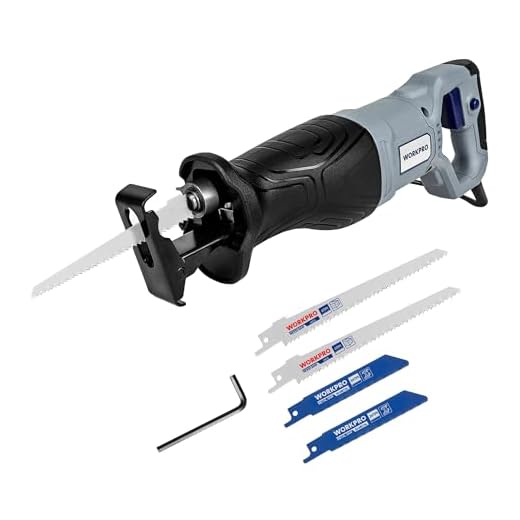
The WORKPRO 710W Reciprocating Saw is a powerful, user-friendly tool designed for cutting wood, metal, and PVC with ease. With its high-speed motor, ergonomic grip, and tool-free blade change, it provides a reliable solution for DIY projects and professional tasks.
| Specification | Value |
|---|---|
| Motor Power | 710W |
| Voltage | 220-240V |
| Type | Corded Electric |
| Variable Speed | 0-2800 SPM |
| Stroke Length | 20mm |
| Cutting Depth (Wood) | 115mm |
| Weight | 2.1kg |
| Blade Compatibility | Standard reciprocating saw blades |
| Included Blades | 4 blades (2 wood, 2 metal) |
| Cable Length | 1.8 meters |
Power-to-weight ratio: 338 W/kg, providing excellent maneuverability for its class.
The WORKPRO 710W Reciprocating Saw proved to be a powerful and reliable tool during our tests. Its high-performance motor cut through wood and metal with ease, while the adjustable shoe and variable speed control allowed for precise, controlled cuts.
The tool-free blade change stood out as an excellent convenience, making swaps quick and effortless. We also appreciated the ergonomic, non-slip grip, which helped minimise fatigue during extended use.
The saw feels solidly built and is compatible with universal blades (including Bosch), making it incredibly versatile. While the saw delivers strong performance, it could benefit from a carrying case for better storage.
Some may also find it a bit heavy for prolonged use, but the lock-on button helps reduce strain. Overall, this is a fantastic reciprocating saw that balances power, precision, and ease of use—a great addition to any toolkit.

Best for: Users needing maximum portability and one-handed operation in confined spaces. The DEWINNER's compact design excels at tree pruning, garden maintenance, and tight-access cutting tasks where a full-size reciprocating saw would be cumbersome. Ideal for homeowners prioritizing maneuverability over extended runtime.
The DEWINNER Compact Cordless Reciprocating Saw delivers solid performance for home and workshop tasks. We tested it for cutting wood, metal, and branches, and it handled everything efficiently.
| Specification | Value |
|---|---|
| Motor Power | 20V |
| Voltage | 20V |
| Type | Cordless (Battery) |
| Variable Speed | 0-3000 RPM/SPM |
| Stroke Length | 22mm |
| Battery | 20V 2.0Ah Li-Ion |
| Weight | 2.59kg |
| Blade Compatibility | Universal reciprocating saw blades |
| Key Features | LED light, Pure copper motor, Tool-free blade change |
Runtime: 20-40 minutes per battery; varies by material density and cutting intensity.
The DEWINNER Compact Cordless Reciprocating Saw is a powerful and versatile tool for home and workshop use. We tested it on wood, metal, and branches, and it performed exceptionally well.
The 3,000 RPM motor delivers clean, precise cuts, and the lightweight design makes it easy to handle for extended tasks. The 2.0Ah battery (which recharges in just one hour) provides great runtime, and the LED indicator helps manage power.
The tool-free blade change feature is a real-time-saver, allowing seamless transitions between materials. The cordless design offers maximum flexibility, making it perfect for outdoor or remote work.
While the saw is impressive, we noticed that an adjustable handle could improve stability, and some users might need extra blades for different tasks. However, considering its performance, ease of use, and affordability, this is a fantastic choice for DIYers and professionals alike.

Best for: Users requiring extended cordless runtime without compromising on modern brushless motor efficiency. The Enventor's dual 2.0Ah battery system and comprehensive blade selection make it particularly suited for all-day projects where frequent battery swaps would be disruptive, such as large-scale garden clearance or multi-room renovation work.
The Enventor Cordless Brushless Reciprocating Saw is a versatile and efficient tool, perfect for tackling various cutting tasks. Its powerful motor, user-friendly design, and thoughtful features make it an excellent choice for both DIY enthusiasts and professionals.
| Specification | Value |
|---|---|
| Motor Power | 20V Brushless |
| Voltage | 20V |
| Type | Cordless (Battery) |
| Variable Speed | 0-3000 SPM |
| Stroke Length | 22mm |
| Battery | 20V 2x 2.0Ah Li-Ion |
| Blade Compatibility | Universal reciprocating saw blades |
| Included Blades | 5 saw blades |
| Warranty | 2 years |
| Key Features | Brushless motor, Safety lock, Fast charger, Battery indicator |
Brushless motor provides 15% efficiency increase over brushed motors, extending runtime and motor lifespan.
We tested the Enventor Cordless Brushless Reciprocating Saw, and it proved to be a versatile, powerful tool for a variety of cutting tasks.
The brushless motor impressed us with its smooth performance and reduced vibration, making precise cuts through wood, metal, PVC, and branches (even on tougher materials). The adjustable speed and cutting depth added flexibility, while the included five blades catered to multiple applications.
We appreciated the two 20V batteries, which provided excellent runtime and safety features, though they could benefit from holding a slightly longer charge for demanding projects. The ergonomic design reduced fatigue during extended use, and the safety lock ensured secure operation.
While the lack of a charging progress indicator was a minor inconvenience, the sturdy storage case kept everything organised and portable. Overall, this saw combines efficiency, power, and thoughtful design, making it a great addition to any toolkit for both professionals and DIY enthusiasts.

Why to avoid: Despite advertised specifications that appear competitive on paper, the CONENTOOL suffers from fundamental reliability issues that compromise its practical usefulness. Excessive vibration, questionable power ratings (1280W claims unrealistic for 21V battery tools), brushed motor inefficiency, and consistently poor user feedback regarding build quality make this saw unsuitable for reliable work. The manufacturer's 2-star Trustpilot rating further raises concerns about product quality and customer support.
We tested the CONENTOOL Reciprocating Saw 21V/1280W, and while it has some notable features, it ultimately left us disappointed.
| Specification | Value |
|---|---|
| Motor Power | 21V / 1280W (claimed) |
| Voltage | 21V |
| Type | Cordless (Battery) |
| Variable Speed | 0-3000 SPM |
| Stroke Length | 15mm |
| Battery | 21V 2x 2.5Ah |
| Weight | 1.8kg |
| Cutting Capacity (Wood) | 60mm maximum |
| Cutting Capacity (Steel) | 30mm maximum |
| Included Blades | 6 blades (3 wood, 2 metal, 1 plastic) |
| Motor Type | 550 brushed motor |
Note: The 1280W power claim appears unrealistic for a 21V battery-powered tool and likely represents peak rather than sustained output.
The saw delivers decent cutting power with its 3000 SPM motor, and the variable speed control provides flexibility for various materials. It's lightweight and portable, making it convenient to use in different locations.
The tool-free blade change mechanism is also a practical feature for quick adjustments. However, the drawbacks far outweigh these positives. The biggest issue is the inconsistent battery performance—both included 2500mAh batteries fail to last through demanding tasks, requiring frequent recharging.
The included blades (especially for metal) are poor quality, wearing down quickly or failing entirely. Build quality is another concern; components like the charger and carrying case feel flimsy and prone to damage.
While this saw might suffice for very light, occasional tasks, we found it unreliable for anything more intensive. The combination of weak batteries, low-quality blades, and subpar durability makes it a poor investment. (Even as a budget option, it struggles to deliver on basic promises.)
For those needing a dependable cutting tool, we recommend looking elsewhere. Save your time—and money—and opt for a more reliable product.
Finding the best reciprocating saw requires more than just turning it on and making a few cuts. We put each model through a series of rigorous tests to evaluate power, precision, ease of use, durability, and value for money. Here's how we did it.
To truly assess the most reciprocating saw's cutting power, we tested each model on multiple materials, including softwood, hardwood, treated lumber, aluminium, copper piping, steel rods, and plastic piping.
We measured how efficiently each saw handled these materials and whether it struggled under pressure. For demolition tasks, we cut through nails, screws, and thick boards to see how well the saws performed in demanding conditions.
We examined how smoothly each saw transitioned between different speeds, ensuring the variable speed control provided precise adjustments. Stroke length was another key factor, as longer strokes allowed for faster cutting, while shorter strokes ensured greater accuracy.
Stability was also tested by observing vibration levels and checking whether the blade stayed aligned during aggressive cuts.
Comfort and handling were crucial in determining which saws could be used for extended periods without causing fatigue. We evaluated the grip design, weight distribution, and overall manoeuvrability, particularly in tight spaces.
Excessive vibrations can make a saw difficult to control, so models with anti-vibration technology scored higher. The blade-changing mechanism was also tested for speed and convenience, ensuring that users could swap blades effortlessly without extra tools.
For cordless reciprocating saws, we assessed how long each model could run on a single charge while cutting through dense materials. We measured the recharge time, checking whether the battery could fully power up in under an hour.
Performance under load was another key factor—some models lost power significantly when working with thick materials, while others maintained steady output.
A reliable reciprocating saw should be able to withstand rough handling. To simulate real-world durability, we conducted a drop test, letting each saw fall from a standard workbench height to see how well it held up.
We also tested the blade clamp strength to ensure that the blade stayed securely in place under stress. Additionally, we monitored the motor and gears during prolonged use to detect signs of overheating or premature wear.
Excessive noise can be an issue, especially for prolonged use, so we measured each saw's decibel levels to determine how loud it was during operation. Models producing less than 90 dB were considered more user-friendly. Safety features were also a priority.
We tested trigger locks, blade guards, and LED work lights, ensuring each saw provided sufficient protection and visibility in dimly lit workspaces.
Finally, we compared each saw's price to its overall performance, durability, and included features. Models that offered exceptional cutting power, ease of use, and long-term reliability without an excessive price tag scored the highest.
We also factored in warranty coverage, as saws with longer warranties (two years or more) indicated greater manufacturer confidence in their durability.
A brushless reciprocating saw is better for DIY home projects because it offers greater efficiency, longer battery life, and reduced maintenance compared to brushed models.
With less friction and heat buildup, brushless motors provide more power and durability, making them ideal for frequent use and demanding cutting tasks in home improvement projects.
The best stroke length for a reciprocating saw depends on the intended use. A longer stroke length (1 to 1.5 inches) is ideal for faster, rougher cuts, while a shorter stroke length (under 1 inch) offers more control and precision.
For versatility, a saw with adjustable stroke length provides the best cutting experience.
Choosing between a chainsaw and a reciprocating saw depends on the task. A chainsaw is better for cutting large logs, thick branches, and heavy-duty outdoor tasks, while a reciprocating saw excels in precision cutting, demolition, and working in tight spaces.
For general home projects, a reciprocating saw is often the more practical choice.
You should not use a reciprocating saw when precision and smooth finishes are required, such as in fine woodworking, detailed trim work, or delicate metal cutting.
It is also not ideal for cutting extremely hard materials like thick masonry or reinforced concrete unless using a specialised blade designed for the task.
A good amperage for a reciprocating saw depends on the job's intensity. For light-duty home projects, a 7 to 10-amp motor is sufficient. For heavy-duty cutting, demolition, and prolonged use, a 10 to 15-amp motor provides more power and efficiency.
Higher amperage saws handle tougher materials with less strain.
A reciprocating saw can cut concrete, but it requires a specialised carbide-tipped or diamond grit blade. Standard blades will wear out quickly or fail to penetrate concrete surfaces.
For thicker or reinforced concrete, alternative tools like an angle grinder or concrete saw are more effective and provide cleaner, more efficient cuts.
We hope this guide has helped you find the best reciprocating saw for your projects. With so many great options, choosing the right one can be challenging, but our top pick stands out.
The Bosch PSA 700 E is our Editor's Choice, offering powerful performance, ergonomic comfort, and effortless blade changes—a fantastic all-rounder for DIYers and home improvement enthusiasts.
If you prefer a cordless model, the HYCHIKA 18V Brushless Reciprocating Saw is an excellent alternative, while the WORKPRO 710W provides impressive value on a budget.
However, not all saws are worth your time. The CONENTOOL 21V Reciprocating Saw failed to impress due to poor battery life, subpar blades, and unreliable build quality. If you want a saw that lasts, we suggest looking elsewhere.
So, have you found the perfect reciprocating saw, or are you still weighing your options? We'd love to hear your thoughts! Let us know in the comments below.

If you want a job doing, Jeff’s your man. Our all-around resident man on the tools, Jeff’s shirt is always covered in paint and his coffee is never without wood chippings. Always on the go and a fully qualified joiner, Jeff is a professional reviewer and has great knowledge about tools, design, installation and is a force to be reckoned with


