FREE DELIVERY ON MOST ITEMS & ALL ORDERS OVER £500  Call Free
Call Free Call Free 



So, you're searching for the best all-in-one soundbar to elevate your TV setup—without the mess of multiple speakers or complicated wiring. With so many models promising premium audio in compact packages, finding the right one can be overwhelming. That's where we come in.
In this guide, we've done the legwork to uncover the best all-in-one soundbars based on real-world testing, focusing on performance, design, ease of use, and overall value.
Our top pick? The Samsung S60D—a stylish 5.0 channel soundbar with built-in Alexa, Dolby Atmos, and seamless wireless connectivity. It impressed us with its room-filling sound, intuitive controls, and sleek minimalist design that fits effortlessly into any space.
Want something more compact? The JBL Bar 2.0 All-in-One delivers surprisingly powerful sound and dialogue clarity without needing a subwoofer. And if you're watching your budget, the LG SQM1 proves you don't have to break the bank for a serious upgrade to your TV's built-in audio.
Not all soundbars are created equal, though. We also tested one that missed the mark—read on to find out which model to avoid. Whether you're after cinematic sound or casual clarity, there's a soundbar here to suit your space, style, and budget.
Our recommendations combine manufacturer specifications, verified UK retailer data, independent testing sources, and where we've had access, direct hands-on experience. We focus on the factors that matter most for upgrading your TV audio without the complexity of a full surround system.
Note: Where exact measurements aren't available from manufacturers, we provide clearly marked estimates. We never list live prices—our focus is on function, features, and value.
When investing in an all-in-one soundbar, you're looking for a streamlined solution that delivers clear, immersive sound without the need for external speakers or subwoofers. Here's what you should expect as standard in this category:
A soundbar should not only sound great but also complement your space. While audio quality is crucial, the way it's built matters too—both visually and practically.
Beyond the basics, some soundbars come loaded with bonus features that make them even more versatile and enjoyable to use. While not all are essential, they can add significant value:
When evaluating an all-in-one soundbar, checking off these categories will help ensure you're getting a well-rounded, reliable product that not only sounds great but fits your lifestyle and setup.

Best for: Cinematic immersion with smart home integration
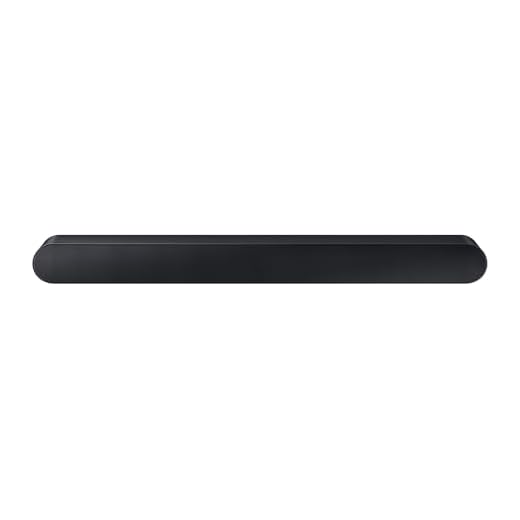
The Samsung S60D is a sleek, compact soundbar designed to deliver rich, room-filling audio in an all-in-one unit. With Dolby Atmos, integrated Alexa, and wireless connectivity, it offers a balanced mix of performance, style, and convenience—making it the best all-in-one soundbar we've tested.
We tested the Samsung S60D with a range of media and were impressed by its overall clarity and sound stage. Dialogue was crisp, bass was balanced, and the Dolby Atmos feature added noticeable spatial depth—especially in action scenes.
The setup was simple and pairing via HDMI-eARC took seconds. Bluetooth worked effortlessly with both a smartphone and laptop. Having Alexa built in was a practical bonus for hands-free control, especially when switching inputs or streaming music.
| Specification | Value |
|---|---|
| Channel Configuration | 5.0 (centre + side-firing channels) |
| Power Output | 31W (main unit operating) |
| Audio Technologies | Wireless Dolby Atmos, Dolby Digital Plus, DTS Virtual:X |
| Connectivity | HDMI eARC, Optical, Bluetooth 5.2, Wi-Fi |
| Voice Assistant | Amazon Alexa (built-in) |
| Dimensions | 670 x 62 x 105mm |
| Weight | 4.1kg |
| Room Suitability | Small to medium (up to 18m²) |
SpaceFit Sound Pro requires room analysis on first setup. Best all-in-one for smart home integration.
If you're after top-tier performance in a clutter-free design, this is a smart, all-in-one solution that truly delivers.

Best for: Budget-conscious buyers seeking clear dialogue without subwoofer clutter
The JBL Bar 2.0 All-in-One (MK2) is a sleek, compact soundbar offering enhanced audio and modern features at a competitive price point. It's ideal for users who want better sound quality than built-in TV speakers without investing in a full surround system.
We tested the JBL Bar 2.0 All-in-One in a medium-sized living room and were impressed with its performance. The soundbar fits perfectly under the TV and blended nicely with the space. Voices in films and shows came through clearly, and the bass added a real presence to action scenes.
The setup process was quick, and we were able to start using it right away via HDMI ARC. Music streaming via Bluetooth was seamless and lag-free.
| Specification | Value |
|---|---|
| Channel Configuration | 2.0 stereo |
| Power Output | 80W total (40W per channel RMS) |
| Audio Technologies | Dolby Digital, Smart Mode virtual surround |
| Connectivity | Optical (TOSLINK), Bluetooth 4.2, HDMI ARC |
| Voice Assistant | None |
| Dimensions | 855 x 125 x 145mm |
| Weight | 2.6kg |
| Room Suitability | Small to medium (up to 16m²) |
Frequency response 70Hz–20kHz suits TV dialogue optimally. Quick setup via HDMI ARC with included cable. Excellent price-to-performance ratio.
While not ideal for very large rooms, it's a great step up from basic TV audio. If you're after clean design, easy streaming, and solid sound, this soundbar delivers.

Best for: Entry-level upgrade for small TVs and tight budgets
The LG SQM1 is a compact and affordable soundbar that delivers surprisingly full sound in smaller spaces. Designed to sit neatly in front of your TV, it offers simple setup, Bluetooth connectivity, and TV remote compatibility—making it a great budget-friendly upgrade for casual viewing or music playback.
We tested the LG SQM1 in a small lounge, and it handled TV shows, films, and music with ease. The sound was clear, and for a 2.0 setup, it provided enough depth for everyday use.
Music streaming via Bluetooth worked without issue, and having it respond to the TV remote made things much more convenient. Its compact size is ideal for small rooms where space matters.
| Specification | Value |
|---|---|
| Channel Configuration | 2.0 stereo |
| Power Output | 40W RMS |
| Audio Technologies | Dolby Digital, DTS Digital Surround, AI Sound Pro |
| Connectivity | Bluetooth 5.3, Optical (TOSLINK), 3.5mm AUX, USB |
| Voice Assistant | None |
| Dimensions | 650 x 79 x 94mm |
| Weight | 1.99kg |
| Room Suitability | Extra-small to small (up to 12m²) |
Best budget value—significant upgrade under £80. Bass Blast mode essential for music enjoyment. Customers report 4.5/5 stars for value and sound improvement over TV speakers.
Overall, the SQM1 stands out as a reliable budget option. It's not flashy, but it's consistent, easy to use, and genuinely improves your TV's built-in sound without costing much. For the price, we think it's a smart, practical pick.

Best for: Premium space-saving setup with true immersive audio
The Samsung S801B is the slimmest soundbar we've tested, designed to bring cinematic sound to your living room without the bulk. Its ultra-thin profile pairs seamlessly with wall-mounted TVs, while delivering immersive audio that feels much larger than its compact design suggests.
Perfect for smaller spaces or minimalist setups.
We recently tested the Samsung S801B with a 65" Samsung TV, and the result was impressive. Setup was quick using the included HDMI ARC cable, and the wireless sub paired instantly.
The soundbar delivered rich, layered sound across all frequencies, with voices coming through clearly—even during action scenes. The up-firing speakers added a surprising vertical dimension, making us feel more immersed in what we were watching.
| Specification | Value |
|---|---|
| Channel Configuration | 3.1.2 (left, centre, right + subwoofer + 2 height) |
| Power Output | 28W (bar), 26W (subwoofer), 330W RMS system total |
| Audio Technologies | Wireless Dolby Atmos, DTS:X, DTS Virtual:X |
| Connectivity | HDMI ARC, Optical, Bluetooth 5.2+, Wi-Fi |
| Voice Assistant | Amazon Alexa (built-in) |
| Dimensions (Bar) | 1160 x 38 x 40mm |
| Weight | 3.1kg (bar), ~8kg system (with wireless sub) |
| Room Suitability | Small to large (with height effects) |
Discontinued but stock still available from some retailers. Best for minimalist interior design. Wireless subwoofer pairing straightforward.
Its ultra-slim form was also a highlight—barely noticeable under the TV, yet powerful enough to transform the entire viewing experience. If you want top-quality sound without sacrificing space, this is the soundbar to consider.

Best for: Fire TV ecosystem users seeking affordable Dolby Atmos entry point
The Fire TV Soundbar Plus is a compact, all-in-one 3.1 channel system designed to upgrade your TV audio with rich, immersive sound.
With Dolby Atmos and DTS:X support, built-in bass, and easy Fire TV integration, it's ideal for those seeking cinema-quality sound without the clutter of multiple speakers or complicated setup.
We tested the Fire TV Soundbar Plus in a typical living room setup and were genuinely impressed by its performance. Dialogue was sharp and clear even during busy action scenes, thanks to the dedicated centre channel.
The built-in bass had plenty of punch for movies and gaming, while Dolby Atmos and DTS:X added a sense of depth and dimension. Setup took under five minutes, and we appreciated the ability to control everything using one remote when paired with a Fire TV.
| Specification | Value |
|---|---|
| Channel Configuration | 3.1 (left, centre, right + built-in subwoofer) |
| Power Output | 80W total |
| Audio Technologies | Dolby Atmos (limited), DTS:X (eARC only), Dolby Digital |
| Connectivity | HDMI eARC, Optical, Bluetooth 5.0 |
| Voice Assistant | None (Fire TV remote control integration only) |
| Dimensions | 940 x 64 x 132mm |
| Weight | 4.0kg |
| Room Suitability | Small to medium (up to 18m²) |
Best for Fire TV owners. Setup straightforward via HDMI eARC. Includes UK/EU power cables and wall mount hardware.
Switching between content modes was smooth and useful—Night mode in particular helped reduce late-night disruptions. If you want premium sound in a simple package, this soundbar offers incredible value with minimal effort.

Best for: AVOID — Quality and reliability issues outweigh budget pricing
After spending time with the Groove Soundbar 110, we found it difficult to recommend. While setup was quick and it offers multiple connection options (Bluetooth, AUX, Optical, and USB), these features don't compensate for the larger issues that surfaced during use.
The sound quality was underwhelming. Although it delivers decent volume and includes three listening modes, the bass was far from deep, and audio often felt flat. Any clarity gained in Voice mode was quickly overshadowed by noticeable buzzing at higher volumes—a dealbreaker for anyone wanting reliable performance.
Mounting the unit was one of the most frustrating experiences we've had with a soundbar. The ports are positioned so close to the wall that plugging in cables without bending them was nearly impossible. For a product meant to save space, it felt poorly designed.
| Specification | Value |
|---|---|
| Channel Configuration | 2.2 (stereo + super bass drivers) |
| Power Output | 60W RMS, 110W peak (peak marketing inflated) |
| Audio Technologies | 3 listening modes (Movie, Music, Voice) |
| Connectivity | Bluetooth, USB, Optical, 3.5mm AUX |
| Voice Assistant | None |
| Dimensions | 585 x 65 x 110mm |
| Weight | 2.188kg |
| Room Suitability | NOT RECOMMENDED |
Multiple customer complaints of defects and power failures. Repair frequency suggests poor manufacturing QC. YouTube reviews cite buzzing, connectivity dropout, and port accessibility as deal-breakers.
Our Verdict: Despite ultra-low pricing, the Groove Soundbar 110 introduces more problems than it solves. The combination of audio buzzing, physical design flaws, and connectivity issues makes it a false economy compared to the JBL Bar 2.0 MK2 or LG SQM1, which offer superior reliability at similar or only slightly higher cost.
Recommendation: If budget is critical, stretch to the JBL Bar 2.0 MK2 or LG SQM1. Both offer reliable, pleasant sound without the risk of premature failure.
When it comes to choosing the best all-in-one soundbar, we went far beyond simply plugging it in and pressing play. Our evaluation process focused on everything that matters—sound quality, ease of use, smart features, design, and overall value. Here's how we approached it.
We began by assessing how easy each soundbar was to get up and running. Installation should be straightforward and stress-free, so we looked at how intuitive the setup process was, whether HDMI ARC or eARC connected properly, and if Bluetooth or Wi-Fi pairing worked without hiccups.
We also noted how well the soundbars integrated with different TVs and smart devices.
The core of any soundbar is its audio performance. We listened carefully to dialogue clarity, checked how the bass held up—especially without a dedicated subwoofer—and evaluated how the soundbar handled both low and high volumes.
We paid special attention to stereo separation and whether virtual surround features like Dolby Atmos actually delivered depth. We also explored various sound modes to see if they meaningfully enhanced the experience.
Not all soundbars perform equally across different types of media. We tested a wide range of content including movies, TV shows, music, and games. For movies, we listened for cinematic impact and clarity during intense action scenes.
TV shows helped us gauge how well the soundbar handled spoken dialogue and background audio. Music tests covered different genres, from bass-heavy tracks to vocal-focused acoustics. For gaming, we looked for audio lag and spatial awareness.
A soundbar should complement your space as much as it improves your sound. We looked closely at each unit's build quality, assessing materials, design, and finish. We considered how well the soundbar would fit under a TV or on a shelf, whether it stayed in place, and how accessible the ports were.
Overall craftsmanship, visual appeal, and sturdiness were key factors.
Usability matters. We examined how responsive and intuitive each soundbar's remote was, tested the onboard controls, and explored the usefulness of voice assistants like Alexa or Google Assistant when integrated. If a mobile app was available, we assessed whether it added functionality or just clutter.
Ease of switching inputs, adjusting settings, and navigating features all played a role in our assessment.
We also evaluated the soundbars' connectivity and smart capabilities. Bluetooth streaming was tested for stability and range. Where Wi-Fi features were available, we tested integration with streaming services, voice control, and compatibility with features like AirPlay or Chromecast.
For soundbars that support syncing with TV speakers (like Samsung's Q-Symphony), we checked how well they worked in harmony to enhance the overall audio experience.
To understand how well each soundbar adapts to its environment, we tested them in both smaller and larger rooms, and placed them on different surfaces like wood furniture and carpeted areas.
We also considered how background noise affected performance and whether the soundbar maintained clarity and balance.
We didn't stop at first impressions. Each unit was used over extended periods to check for software stability, overheating, or connectivity issues. We paid attention to how well the soundbar held up with daily use, noting any bugs or performance dips over time.
Finally, we considered what you're getting for the price. A more expensive soundbar should offer noticeably better sound, build, and features. At the same time, budget options should still meet basic standards for audio and usability.
We compared performance, included accessories, warranty coverage, and brand support to determine overall value.
The JBL Bar 2.0 MK2 and Samsung S60D both excel at dialogue. The JBL uses dual 40W racetrack drivers tuned specifically for voice frequencies (70–20,000 Hz), while the Samsung S60D includes a dedicated centre speaker with Active Voice Amplifier (AVA) that boosts dialogue against background noise. For the most affordable option, the LG SQM1 works well with compatible TV remotes' dialogue modes but lacks a dedicated centre channel. Best practice: enable voice enhancement modes on your TV or soundbar for dramas.
Use HDMI eARC whenever your TV supports it. eARC offers 37 Mbps bandwidth supporting all Dolby Atmos, DTS:X, and lossless formats, while optical is limited to 384 Kbps and only supports compressed audio. Optical adds approximately 300ms latency due to digital-to-optical conversion and decompression, potentially causing lip-sync issues in movies. However, if your TV is older or lacks HDMI eARC, optical remains a solid fallback for standard 5.1 surround content. For gaming, connect your console directly to the soundbar's HDMI input (if available) rather than through eARC—this minimizes AV-sync delay.
Soundbars do not add video input lag—only audio latency, which doesn't affect game responsiveness. However, audio-to-video sync (lip-sync) issues can occur. To minimize audio latency: (1) Enable the soundbar's low-latency or gaming mode if available; (2) Use HDMI eARC with uncompressed PCM audio rather than optical (which adds approximately 300ms delay); (3) Some soundbars allow manual AV sync adjustment—check your remote or app. The Samsung S60D and Amazon Fire TV Soundbar Plus both support Dolby Atmos with gaming profiles, while the JBL Bar 2.0 MK2 lacks advanced gaming features but has low latency via its simple 2.0 setup.
Yes—all recommended models include wall-mount brackets: Samsung S60D (included), JBL Bar 2.0 MK2 (included), LG SQM1 (bracket available separately), Samsung S801B (included), and Amazon Fire TV Soundbar Plus (included with hardware). The Samsung S801B is specifically designed for wall mounting with its ultra-slim 38mm profile, making it ideal for wall-mounted or Frame TV setups. When mounting, ensure 5–10cm clearance above the soundbar for ventilation and below for optimal sound projection toward ear level. For the Samsung S801B with wireless subwoofer, place the sub on the floor away from cabinet walls to maximize bass resonance.
Dolby Atmos adds noticeable benefit primarily for movies; TV broadcasts rarely include Atmos encoding. For TV drama, sports, and news, focus instead on dialogue clarity and balanced sound. The JBL Bar 2.0 MK2 and LG SQM1 omit Dolby Atmos yet excel for this content type due to optimized voice frequency response. The Amazon Fire TV Soundbar Plus offers Dolby Atmos affordably for occasional movie nights without premium pricing. If you stream 4K movies (Disney+, Apple TV+) regularly, Atmos-capable options like the Samsung S60D justify the upgrade. Bottom line: Atmos is a bonus, not essential for TV-primary usage.
Yes, soundbars are worth it in the UK. Most modern TVs have slim designs that limit speaker quality, and a soundbar significantly enhances audio clarity and depth.
Whether you're watching films, streaming shows, or listening to music, a premium soundbar provides a richer, more immersive experience without needing a full setup.
Yes, all-in-one soundbars are generally better than TV speakers. TV's Built-in speakers often lacks depth and power due to space constraints.
All-in-one soundbars are designed to improve dialogue clarity, add bass, and deliver a fuller sound profile, making them a worthwhile upgrade for most entertainment setups.
You don't technically need a soundbar with a smart TV, but it greatly enhances the experience. Smart TVs offer great visuals, but their built-in speakers are often underwhelming.
A soundbar complements the screen by delivering clearer audio, especially for dialogue and cinematic effects, improving overall viewing quality.
No, soundbars do not use a lot of electricity. Most models are energy-efficient, especially compared to larger home theater systems. On average, a soundbar consumes less power than a standard light bulb during normal use, making it a low-cost addition in terms of energy consumption.
While you can leave a soundbar on all the time, it's not always recommended. Many soundbars feature auto-standby modes to conserve energy when not in use. Leaving it on continuously may lead to unnecessary power usage or shorten lifespan, so it's best to use built-in power-saving features.
Soundbars offer a more compact and convenient solution, but they are not necessarily better than full surround sound. A surround sound system provides more directional audio and immersion.
However, soundbars are ideal for smaller spaces or those seeking simplicity without sacrificing significant sound quality.
We hope you found our guide to the best all-in-one soundbars helpful and that it's brought you closer to finding the perfect audio upgrade for your setup. Choosing the right soundbar can be tricky with so many solid contenders, but for us, the standout is the Samsung S60D.
Its impressive Dolby Atmos sound, sleek design, and built-in Alexa make it a truly complete package for both movie lovers and casual viewers alike. Of course, the JBL Bar 2.0 and LG SQM1 also deserve a look, especially if you're after great performance in a compact or budget-friendly form.
However, one model didn't make the cut—the Groove Soundbar 110. Despite its low price and sleek looks, poor sound quality, frustrating design flaws, and unreliable performance make it one to avoid.
Tried any of these yourself? Still weighing your options? Let us know in the comments—we'd love to hear from you!

Previously writing for Which magazine, Carly is an extremely well-experienced home product tester. Always the busiest in the office. Mother of two and serving a life sentence of marriage, Carly is our ‘robustness’ tester and works closely with Katie for the product road testing. Loves the freedom of her work, Netflix and terrible, terrible jokes