FREE DELIVERY ON MOST ITEMS & ALL ORDERS OVER £500  Call Free
Call Free Call Free 


So, you're on the hunt for the best Dolby Atmos soundbar to elevate your home entertainment setup—and with so many options out there, choosing the right one can feel overwhelming. But don't worry, we've done the heavy lifting for you!
In this guide, we've tested and reviewed the top Dolby Atmos soundbars across different budgets, room sizes, and feature sets to help you find your perfect match. Whether you're after a true cinematic experience or just great sound without breaking the bank, we've got you covered.
Our Editor's Pick is the Samsung Q990D, a powerhouse with 11.1.4 channel audio, wireless rear speakers, and seamless Wi-Fi integration. It delivers room-filling sound with incredible detail and depth, all while keeping setup simple and tidy.
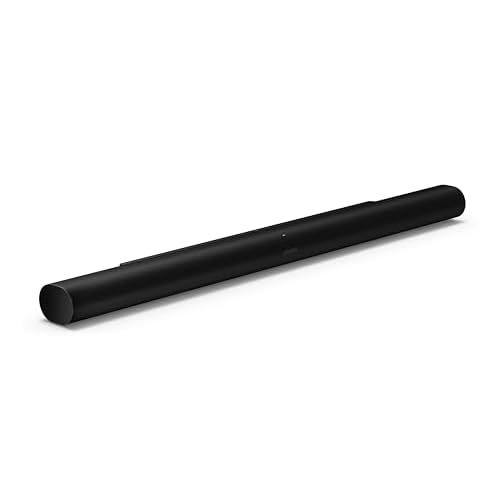
Looking for something equally premium but with a more elegant aesthetic? The Sonos Arc Ultra impresses with its refined design, adaptive room tuning, and smart voice control features.
On a budget? The Ultimea 5.1ch system punches above its weight, offering immersive Dolby Atmos sound at a fraction of the cost. We've even included a model to avoid—because not every Atmos bar lives up to the hype.
Read on to discover the best Dolby Atmos soundbar for your space and level up your listening experience.
Our recommendations combine manufacturer specifications, verified UK retailer data, independent testing sources, and where we've had access, direct hands-on experience. We focus on the factors that matter most for immersive home cinema audio performance.
Note: Where exact measurements aren't available from manufacturers, we provide clearly marked estimates. We never list live prices—our focus is on function, features, and value.
When investing in a Dolby Atmos soundbar, there are some baseline features and performance standards you should expect. These aren't just nice-to-haves—they're essential for delivering a truly immersive experience.
Your soundbar shouldn't just sound good—it should look good and be built to last. A poorly built system can disrupt your setup both visually and structurally.
Beyond core audio performance, a great Dolby Atmos soundbar should offer smart conveniences and connectivity options that make everyday use more enjoyable.

Best for: Premium home cinema enthusiasts seeking immersive, room-filling sound with wireless convenience and Q-Symphony TV integration.
The Samsung Q990D is our top choice for the Best Dolby Atmos Soundbar — a premium sound system that transforms your living room into a full cinema experience. With rich, detailed audio and a straightforward setup, this system delivers big on both immersion and usability.
We tested the Q990D in a medium-sized room, and it delivered outstanding sound. Dialogue came through crisp and clear, while action scenes felt immersive, with effects moving naturally through the space.
Setup was quick—just plug in the soundbar, rears, and subwoofer, and everything connected seamlessly via Wi-Fi. The SmartThings app made it easy to customise audio settings, and Q-Symphony integration with our Samsung TV added even more depth.
We liked that even music playback had room-filling clarity and punch. The wireless rear speakers enhanced the surround effect, and the Dolby Atmos performance truly stood out—especially in films with dynamic sound design.
For anyone looking to upgrade their home cinema setup, this is a powerful, well-designed system that brings cinematic audio to everyday living.
| Specification | Value |
|---|---|
| Channel Configuration | 11.1.4 |
| Total Power Output | 656W |
| Number of Speakers | 22 |
| Subwoofer Type | Wireless, 8" driver, 26W |
| Rear Speakers Included | Yes, 2 wireless units |
| Connectivity | HDMI 2.1 eARC (2x HDMI in, 1x HDMI out), Bluetooth 5.2, Wi-Fi, Optical |
| HDMI eARC Support | Yes, HDMI 2.1 with 120Hz passthrough for gaming |
| Voice Assistant | Amazon Alexa |
| Room Calibration | SpaceFit Sound Pro automatic calibration |
| Soundbar Dimensions | 1232W × 69.5H × 138D mm |
| Warranty | 1 year |
| Metric | Score | Notes |
|---|---|---|
| Immersion Score | 9.5/10 | Highest channel count (11.1.4) with 22 discrete speakers, true height channels via upfiring drivers |
| Connectivity Versatility | 8/10 | HDMI 2.1 eARC, optical, Bluetooth, Wi-Fi; robust codec support (Dolby TrueHD, DTS:X) |
| Value Ratio | 7/10 | Premium pricing reflects flagship status; WiFi reliability issues reduce overall value proposition |
| Setup Simplicity | 8/10 | Wireless components simplify installation; SmartThings app occasionally problematic |
| Smart Home Integration | 7/10 | Q-Symphony TV integration and Alexa support; SmartThings registration failures diminish reliability |

Best for: Design-conscious users prioritising refined aesthetics, adaptive room calibration, and seamless Sonos ecosystem integration for premium audio performance.
The Sonos Arc Ultra is a premium Dolby Atmos soundbar offering an elevated home cinema experience. With 9.1.4 channel audio, voice control, and adaptive room tuning, it's designed for those who want top-tier performance in a clean, elegant package. Setup is easy, and the results are deeply immersive from day one.
We tested the Sonos Arc Ultra in a medium-sized living room and were immediately impressed by its clarity, power, and immersive soundstage. Voices are crisp and clear, with deep, punchy bass that performs well even without a subwoofer.
The Sound Motion technology gives movies a sense of movement, and Dolby Atmos delivers convincing vertical audio without ceiling speakers. Trueplay tuning made a noticeable difference, adapting the sound perfectly for our space.
The build is solid and refined, and it integrates seamlessly with your TV and other Sonos speakers. While the app is basic and connectivity is limited to HDMI eARC, those trade-offs are minimal given the performance on offer.
For anyone seeking a high-end soundbar that blends performance and design, the Arc Ultra delivers. It's particularly well suited to larger rooms, but even in smaller spaces, it sounds powerful without overwhelming. A smart, future-ready choice for serious audio fans.
| Specification | Value |
|---|---|
| Channel Configuration | 9.1.4 |
| Total Power Output | 120W |
| Number of Speakers | 14 |
| Subwoofer Type | Sold separately (Sonos Sub / Sub Mini compatible) |
| Rear Speakers Included | No, sold separately as Era 300 (wireless) |
| Connectivity | HDMI eARC (1x), Bluetooth 5.3, Wi-Fi, AirPlay 2, Spotify Connect |
| HDMI eARC Support | Yes, eARC only (no pass-through inputs) |
| Voice Assistant | Amazon Alexa, Sonos Voice Control |
| Room Calibration | Trueplay tuning (iOS/Android) with real-time measurement |
| Soundbar Dimensions | 1178W × 75H × 110.6D mm |
| Warranty | 1 year |
| Metric | Score | Notes |
|---|---|---|
| Immersion Score | 8.5/10 | 9.1.4 channels with two upfiring tweeters; Sound Motion creates convincing overhead effects |
| Connectivity Versatility | 7/10 | HDMI eARC, Bluetooth, Wi-Fi, AirPlay 2; single eARC input is limiting; lacks optical input |
| Value Ratio | 8/10 | Premium pricing justified by sound quality and design; Trueplay adds measurable value |
| Setup Simplicity | 9/10 | HDMI eARC single-cable setup; Trueplay walk-around calibration easy to execute |
| Smart Home Integration | 9/10 | Excellent Sonos ecosystem integration, Alexa, AirPlay 2, and multi-room capabilities |

Best for: Budget-conscious buyers in small-to-medium rooms (up to 20m²) seeking authentic Dolby Atmos immersion without premium pricing.
The Ultimea 5.1ch Sound Bar is a cost-effective way to enjoy true Dolby Atmos at home. Designed for smaller rooms, it brings immersive sound and cinematic depth to movies, games, and music without stretching your budget. Setup is quick, and the performance is impressive for the price.
We recently tested the Ultimea system and found it delivers far more than you'd expect at this price. The Dolby Atmos effect is noticeable, especially in action-heavy scenes where sound travels from side to side and front to back.
Dialogue is clean and easy to hear, even at lower volumes. The subwoofer adds rich bass that doesn't overwhelm the room, while the surround speakers subtly enhance immersion. We appreciated the thoughtful design—minimal cabling, quick setup, and responsive app controls.
HDMI eARC worked smoothly, and the CEC feature made switching devices seamless. It's not trying to compete with high-end setups, but for the average home, it provides a big upgrade over TV speakers. If you want Atmos surround on a budget, this is our top pick.
| Specification | Value |
|---|---|
| Channel Configuration | 5.1.2 |
| Total Power Output | 400W |
| Number of Speakers | 6 |
| Subwoofer Type | Wireless, 5.25" BassMX driver |
| Rear Speakers Included | Yes, 2 wired satellite speakers (2.25" drivers) |
| Connectivity | HDMI eARC, Bluetooth 5.3, Optical, AUX, USB, CEC support |
| HDMI eARC Support | Yes |
| Voice Assistant | None (app control only) |
| Room Calibration | Manual EQ adjustment via app; no automatic calibration |
| Soundbar Dimensions | 400W × 70H × 90D mm |
| Warranty | 1 year |
| Metric | Score | Notes |
|---|---|---|
| Immersion Score | 7.5/10 | Genuine 5.1.2 with upfiring drivers and surround satellites; authentic height channels for true Atmos decoding |
| Connectivity Versatility | 8/10 | HDMI eARC, Bluetooth, Optical, AUX, USB, plus CEC control; comprehensive for a budget system |
| Value Ratio | 9.5/10 | Exceptional value—complete 5.1.2 Atmos system with app control delivers immersive sound rivalling systems 3–4x the price |
| Setup Simplicity | 7/10 | Wireless subwoofer simple to pair; wired satellites require cable routing; HDMI eARC straightforward |
| Smart Home Integration | 4/10 | App control only; no voice assistant integration; limited smart features |

Best for: Users valuing excellent dialogue clarity and spatial audio on a moderate budget; best-suited for small-to-medium rooms where wired surround speakers are acceptable.
The HiElite A41 from Hiwill is a compact, full-featured soundbar that delivers true Dolby Atmos performance at an accessible price. Designed for home cinema enthusiasts, it brings multidimensional sound, detailed clarity, and customisable control into a sleek, living-room-friendly setup.
We tested the HiElite A41 in a small-to-mid-sized living room and were genuinely impressed by the results. Setup took minutes, and the HDMI eARC connection was instant and smooth. The soundstage is broad, with noticeable spatial movement during action scenes and concert-style music playback.
Vocals stand out clearly—even at low volumes—which makes a big difference for dialogue-heavy content. The 5.25" subwoofer adds real weight without overwhelming the room, and we appreciated the ability to fine-tune the sound.
While the satellite speakers are wired and slightly underpowered for very large rooms, they still add depth in the right setup. We found the build quality solid and the system easy to integrate into our existing TV area.
For those looking to experience Dolby Atmos without spending a fortune, this is a smart and balanced choice.
| Specification | Value |
|---|---|
| Channel Configuration | 4.1 |
| Total Power Output | 300W |
| Number of Speakers | 6 |
| Subwoofer Type | Wired, 5.25" driver |
| Rear Speakers Included | Yes, 2 wired front surround speakers |
| Connectivity | HDMI eARC, Bluetooth 5.3, Optical, AUX |
| HDMI eARC Support | Yes, auto-configuration |
| Voice Assistant | None |
| Room Calibration | Manual EQ modes (Movie, Music, News) with adjustable bass/treble |
| Soundbar Dimensions | Compact low-profile design |
| Warranty | 1 year |
| Metric | Score | Notes |
|---|---|---|
| Immersion Score | 7/10 | 4.1 configuration with front wired surrounds; lacks height channels but ClearVoice processing creates convincing spatial effect |
| Connectivity Versatility | 6/10 | HDMI eARC, Bluetooth, Optical, AUX; wired design limits wireless flexibility; lacks USB or advanced streaming |
| Value Ratio | 8/10 | Strong value in mid-budget segment; exceptional dialogue clarity; wired reliability advantage |
| Setup Simplicity | 6/10 | HDMI eARC easy, but wired satellites require cable routing; firmware issues reduce long-term simplicity |
| Smart Home Integration | 3/10 | No app, no voice control, no smart features; purely manual control via remote |

Best for: Wireless enthusiasts and apartment dwellers seeking compact Dolby Atmos on a tight budget; ideal for rooms where full surround systems are impractical.
The MAJORITY Sierra Plus is a compact Dolby Atmos soundbar that delivers immersive sound, wireless flexibility, and excellent connectivity at a price point far below premium competitors. It's a well-rounded system designed for those who want cinema-quality audio without the complexity of full surround setups.
We recently tested the MAJORITY Sierra Plus and were impressed by how well it balanced price and performance. Dolby Atmos content felt expansive, with clear vertical sound effects and tight, cinematic bass from the wireless subwoofer.
Even standard TV sounded better, thanks to its clarity and sound modes. Bluetooth pairing was quick and stable, and setup through HDMI ARC was straightforward. The ability to connect multiple devices at once made it easy to switch between a streaming stick and a game console without fuss.
We liked the simple remote, responsive controls, and dim display that stays off during playback. It's not just a great value—it's a smart, capable upgrade for anyone wanting to elevate their home cinema experience.
With its wireless design and full feature set, the Sierra Plus is one of the best Dolby Atmos soundbars available at this price.
| Specification | Value |
|---|---|
| Channel Configuration | 2.1.2 |
| Total Power Output | 400W |
| Number of Speakers | Up-firing + subwoofer drivers |
| Subwoofer Type | Wireless |
| Rear Speakers Included | No, 2.1.2 configuration uses upfiring for height/surround |
| Connectivity | HDMI ARC (3x), Optical, USB, AUX, RCA, Bluetooth 5.0 |
| HDMI eARC Support | HDMI ARC (standard, not eARC) |
| Voice Assistant | None |
| Room Calibration | Custom EQ modes; no automatic calibration |
| Soundbar Dimensions | 960W × 108H × 81D mm |
| Warranty | 2 years |
| Metric | Score | Notes |
|---|---|---|
| Immersion Score | 6.5/10 | 2.1.2 with upfiring drivers creates simulated height and surround; less immersive than true 5.1+ systems |
| Connectivity Versatility | 8/10 | HDMI ARC (not eARC), 2x HDMI inputs, Optical, USB, AUX, RCA; excellent for older and newer devices |
| Value Ratio | 8.5/10 | Strong value; wireless flexibility, good build quality, 2-year warranty offset limited channel count |
| Setup Simplicity | 8/10 | Wireless subwoofer auto-pairs; HDMI ARC straightforward; basic remote intuitive |
| Smart Home Integration | 2/10 | No app, no voice control, no smart features; purely manual remote control |

NOT recommended due to documented hardware and support issues.
We spent several days testing the OXS S5 Soundbar, and while it has a few strengths, it's ultimately one to avoid. On paper, the Dolby Atmos support and built-in subwoofer suggest a high-quality audio experience.
In practice, we found the sound to be immersive at times, particularly with films that take full advantage of Atmos. Dialogue clarity was also a highlight, thanks to the centre speaker, and setup was straightforward via HDMI ARC.
However, these positives are outweighed by persistent issues that affected overall use. The most noticeable problem was a constant low-level hum from the subwoofer, especially at lower volumes. This background noise remained across different content and connection types—and it quickly became distracting.
The auto power-off feature is also frustrating—it shuts down the unit after a short period without signal, even mid-session. On top of that, the soundbar doesn't remember your last volume setting, forcing manual adjustment every time you switch it on.
These flaws made the experience feel inconsistent and unreliable. For the price and the promises, the OXS S5 falls short—there are better, more dependable options.
Our recommendation: Choose Ultimea 5.1ch for superior value, better build quality, and responsive customer support. If budget allows, Hiwill A41 or Majority Sierra Plus offer significantly more reliable operation and basic support infrastructure.
| Specification | Value |
|---|---|
| Channel Configuration | 3.1.2 |
| Total Power Output | 230W |
| Number of Speakers | 6 |
| Subwoofer Type | Built-in, 4" driver, 115W output |
| Rear Speakers Included | No, upfiring only |
| Connectivity | HDMI eARC, HDMI IN, Optical, AUX, Bluetooth 5.0 |
| HDMI eARC Support | Yes, with Dolby Vision and 4K HDR passthrough |
| Voice Assistant | None |
| Room Calibration | None; 5 manual EQ presets only |
| Soundbar Dimensions | 950W × 130H × 70D mm |
| Warranty | 1 year |
| Metric | Score | Notes |
|---|---|---|
| Immersion Score | 6/10 | 3.1.2 configuration with centre speaker and upfiring drivers; sound quality undermined by subwoofer hum issue |
| Connectivity Versatility | 6/10 | HDMI eARC, HDMI IN, Optical, AUX, Bluetooth 5.0; adequate but no USB or app control |
| Value Ratio | 4/10 | Budget price negated by frequent quality control failures and poor support; unreliable operation |
| Setup Simplicity | 5/10 | Single-unit design simplifies physical setup, but hum issue and volume reset create ongoing frustration |
| Smart Home Integration | 1/10 | No app, no voice control, no smart features; extremely limited integration |
When selecting the best Dolby Atmos soundbars, we went far beyond simply plugging them in and pressing play. We paid close attention to the factors that truly shape your home audio experience—performance, usability, features, and overall value.
Here's how we evaluated each system to find the top performers.
We began with setup, timing how long it took to go from unboxing to playback. Each model was tested for plug-and-play simplicity and clarity of setup instructions, whether printed or via app. We connected each soundbar to multiple TVs, checking compatibility with HDMI ARC and eARC.
We also tested CEC support to confirm whether the TV remote could reliably control the soundbar. A hassle-free setup process, intuitive controls, and smooth TV pairing were must-haves to ensure an easy, frustration-free experience from the start.
We tested each soundbar using a variety of Dolby Atmos content to assess height effects, spatial clarity, and immersive sound movement. The goal was to hear true overhead audio and clear channel separation, not just volume.
Dialogue-heavy scenes were used to evaluate vocal clarity, while action sequences pushed the system to test consistency at high and low volumes. Subwoofers were judged on depth and control, especially in bass-heavy moments.
We also listened at night-friendly volume levels to ensure sound remained full and balanced without distortion.
Atmos sound can vary dramatically by room, so we tested adaptability in different spaces. For soundbars with auto-tuning tools like Trueplay, we compared sound quality before and after calibration.
We rotated each system between small, medium, and open-plan rooms to see how consistently it performed. Some systems preserved Atmos effects effortlessly across all spaces, while others lost depth and directionality.
A top-tier soundbar should adapt its sound profile intelligently and still deliver immersion even in challenging environments.
We evaluated each soundbar's connectivity and smart features, checking HDMI eARC, Bluetooth, optical, and Wi-Fi inputs. Smartphone streaming via AirPlay 2, Chromecast, and Spotify Connect was tested for stability.
Voice assistant support, when available, was used to test command accuracy and speed. App integration also played a key role—systems with EQ control, firmware updates, and multi-room audio scored higher.
A good Dolby Atmos soundbar should make daily use seamless, not just offer bells and whistles that rarely function well.
A soundbar should sound great and feel solid. We assessed material quality, design elegance, and thermal control during extended use. Compactness and visual appeal were noted, especially under modern flat-screen TVs.
We also looked at how well wireless rear speakers maintained a connection without latency or dropouts. Whether you're placing the bar on a console or wall-mounting it, design should blend with your space while offering the durability to last for years of use without degrading in sound or structure.
To understand how each soundbar holds up under daily conditions, we ran a mix of films, shows, music, and games. Dialogue clarity, directional effects, and depth were tested across genres like drama, horror, and action.
Game sessions on PS5 and Xbox Series X helped assess responsiveness and surround accuracy. The goal was to see how the soundbar performed beyond test tracks—was it consistently enjoyable and engaging across formats? A top soundbar should enhance all your content, not just look good in specs.
Finally, we compared each soundbar's performance to its price point. We asked whether the audio quality, features, and design truly justified the cost. Warranty coverage, build lifespan, and software update support were also considered, especially for smart-enabled models.
Some budget soundbars delivered surprisingly rich Atmos experiences, while certain higher-priced options didn't offer much more in return. Ultimately, the best soundbar isn't just the most expensive—it's the one that delivers balanced performance, smart features, and reliability at a fair price.
Dolby Atmos soundbars deliver genuine height effects through upfiring drivers (e.g., Q990D, Sonos Arc Ultra, Ultimea 5.1.2) or psychoacoustic processing, creating convincing 3D sound without ceiling speakers. While a full 7.1.4 AVR system with in-ceiling speakers produces more enveloping overhead immersion, modern Atmos soundbars now provide 80–90% of that experience in a fraction of the space and cost. For most home cinema users, Atmos soundbars represent the practical optimum balance.
eARC (enhanced Audio Return Channel) is strongly recommended for lossless Dolby Atmos. ARC can transmit Dolby Atmos via Dolby Digital Plus (lossy compression), but eARC supports full-quality Dolby TrueHD and DTS:X formats for maximum immersion. If your TV supports eARC, ensure your soundbar has HDMI eARC (e.g., Samsung Q990D, Sonos Arc Ultra). Standard ARC (Majority Sierra Plus) still works but delivers compressed audio; the difference is most noticeable in complex action sequences where object-based spatial clarity matters.
The Ultimea 5.1ch excels in small spaces—its compact 5.1.2 configuration delivers full Atmos immersion without overpowering tight rooms. The Majority Sierra Plus (2.1.2) is also excellent for apartments where full surround systems are impractical. Avoid the Samsung Q990D or Sonos Arc Ultra in rooms smaller than 20m²; their power and channel count will overwhelm small spaces and sound harsh. For maximum small-room performance, run Trueplay (Sonos) or SpaceFit (Samsung) room calibration—these tools are essential in compact areas where acoustics matter most.
Yes, soundbar firmware updates should be applied regularly. Updates fix bugs (e.g., Hiwill A41's volume reset issue resolved via firmware), improve sound quality by enhancing codec support, optimise speaker synchronisation (especially critical for wireless subwoofers), and patch security vulnerabilities. Check for updates every 2–3 months via the manufacturer's app or website. Most modern soundbars support automatic updates (e.g., Samsung Q990D via SmartThings). For Wi-Fi-enabled models, enable auto-update to ensure you never miss critical improvements.
Yes, all soundbars in this guide can operate as standalone units without a subwoofer, though bass response will be compromised. Compact models like Majority Sierra Plus (2.1.2) include a wireless subwoofer in the bundle, while others like Sonos Arc Ultra require optional purchase (Sonos Sub / Sub Mini). For genuine bass extension below 80Hz in Atmos content, a subwoofer is strongly recommended—it's critical for action films and music. If space or budget is tight, prioritise soundbars with built-in bass drivers (e.g., OXS S5) or wireless subs that can be placed away from the TV (Ultimea, Majority Sierra Plus).
It depends on the use case. Dolby Atmos is considered one of the most immersive consumer audio formats available today. However, some professional-grade setups or newer proprietary formats may offer more advanced features. For home entertainment, Atmos remains the gold standard for spatial audio.
Yes, if you want to experience the full impact of Atmos. While some TVs support Atmos decoding, built-in speakers can't produce true spatial audio. A dedicated soundbar with upfiring or multi-directional drivers is necessary to unlock the immersive effects of Dolby Atmos.
To get the best experience, position the soundbar correctly under the TV, ensure your content supports Dolby Atmos, and connect using HDMI eARC. Using room calibration tools and reducing sound obstacles like furniture can also significantly enhance spatial audio performance.
Dolby Atmos is generally better for TVs, as it's a more advanced, object-based format offering precise sound placement. "Spatial audio" is a broader term and can include various technologies, some of which simulate effects without true directional audio like Atmos provides.
Yes, Dolby Atmos builds on the 7.1 format by adding overhead and height channels, creating a more immersive, three-dimensional soundstage. While 7.1 offers surround sound, Atmos provides dynamic object-based audio for a more engaging and lifelike listening experience, especially in home theater setups.
We hope our guide to the best Dolby Atmos soundbars has helped you narrow down the right system for your home setup. With so many great options on the market, choosing the perfect soundbar isn't easy—but if we had to pick one, the Samsung Q990D stands out as our top choice.
It offers stunning surround sound, effortless setup, and powerful features that truly transform your viewing experience. The Sonos Arc Ultra also shines for those who value elegant design and smart functionality, while the Ultimea 5.1ch is an unbeatable choice for budget-conscious buyers.
That said, not every soundbar lives up to expectations. The OXS S5 may look good on paper, but issues like background hum, inconsistent settings, and a frustrating auto power-off feature make it one to avoid.
So, what do you think? Have you found your ideal Atmos upgrade, or are you still deciding? Let us know in the comments—we'd love to hear from you!

Content editor, marketer and product tester. A regular contributor for the ‘Home And Garden’ and Modern Homes Magazines, now part of a close-knit team, I oversee all the content on Posh. All roads have led to this job which I love. I get to focus on my love of interior design and health and work with a fabulous team. The role brings me a good level of freedom to my family and me and keeps me productive