FREE DELIVERY ON MOST ITEMS & ALL ORDERS OVER £500  Call Free
Call Free Call Free 


So, you’re ready to kickstart your indoor growing journey but not sure which heated propagator is worth your investment? With so many options promising quick germination and healthy seedlings, choosing the right one can feel overwhelming. Don’t worry, we’ve done the digging for you!
In this guide, we tested and compared some of the most popular heated windowsill propagators to find the best performers for every type of grower. From compact electric models to affordable starter kits, we focused on reliability, consistency, ease of use, and build quality.
The Garland Electric Heated Windowsill Propagator stood out as our Editor’s Pick for its steady warmth, durable design, and exceptional results across multiple plant types.
Close behind, the EarlyGrow Heated 3-Bay Propagator impressed us with its robust construction and smooth performance, earning the Runner-Up spot. For gardeners on a budget, the Eezy Grow 7 Electric Propagator offers fantastic value with user-friendly features and dependable heating.
We’ve also included one product to steer clear of, the XVZ Heated Propagator, which fell short on design and reliability. Read on to discover which model best suits your setup and get your seedlings thriving this season.
When buying a heated propagator, it’s important to know what you should expect as standard. These devices are designed to provide the warmth, moisture control, and protection young plants need to thrive indoors, particularly during colder months.
A good model should deliver steady heat, even distribution, and a simple setup without requiring constant adjustment. Whether you’re a hobby gardener or a seasoned grower, these features are the foundation of reliable performance.
A quality heated propagator should feel solid, well-balanced, and made to last through multiple growing seasons. Look for materials that resist cracking under heat and are easy to clean after use.
Models with shatter-resistant lids and reinforced trays not only last longer but also protect delicate seedlings from fluctuations in temperature or accidental knocks.
While many heated propagators perform well with just the basics, some offer extra features that can make your growing experience more precise and efficient. These additions can be particularly useful for gardeners looking to fine-tune conditions or extend their growing season.
A combination of these essentials and extras will help you choose a heated propagator that fits your needs, whether you’re nurturing herbs on a windowsill or starting a full batch of seedlings for the garden.

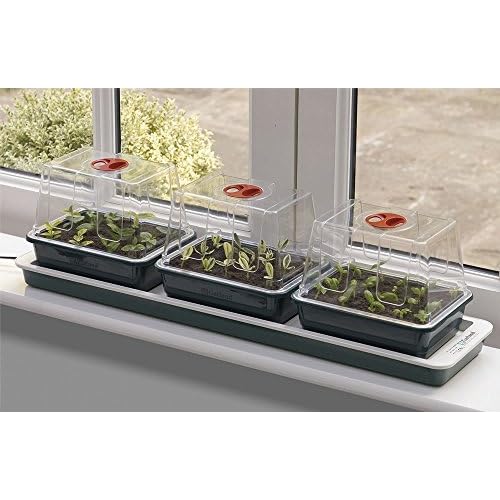
The Garland Electric Heated Windowsill Propagator is a compact and reliable system for starting seedlings indoors. We’ve used it through several growing cycles and found it ideal for early germination, maintaining steady warmth and humidity for healthy, consistent growth across a variety of plants.
We tested the propagator over several weeks and were impressed by its performance. The soil temperature stayed steady between 24–30°C, giving us rapid germination for tomatoes, melons, and herbs.
The heat distribution is even, and the underside remains cool, making it safe for continuous indoor use. The clear lids maintain humidity without causing excess condensation, while the ventilation slots prevent mould.
Each tray is deep enough for seedlings to establish before transplanting, and the lightweight design makes it easy to move and refill. For small-space gardeners, this model is a standout.
Reliable, well-built, and simple to operate, the Garland Electric Heated Propagator offers professional-level results from the comfort of your windowsill. It’s an excellent choice for anyone wanting to start the growing season early and ensure strong, healthy plants every time.

The EarlyGrow Heated 3-Bay Propagator is a compact, durable unit designed to give seedlings and cuttings the perfect start indoors. We found it ideal for windowsills or small spaces, maintaining a steady, gentle heat that encourages fast, healthy germination through the colder months.
We recently tested the EarlyGrow Heated Propagator and were impressed by its solid construction and consistent performance. The heat output was steady, creating an ideal microclimate that encouraged seedlings to sprout evenly within days.
The lids effectively recycled condensation, meaning less watering and fewer humidity issues. We liked how each tray could be used independently, allowing us to manage different plants efficiently. The adjustable vents offered fine control over airflow, helping prevent mould.
While the lack of temperature adjustment means you’ll need to monitor watering carefully, the reliability and ease of setup more than make up for it. Overall, this is a dependable, well-built option that delivers excellent results for anyone looking to start seeds or cuttings indoors.

The Eezy Grow 7 Electric Heated Propagator is a smart, space-saving solution for starting seeds indoors. It combines reliable heating with humidity control to help you achieve strong, consistent growth.
Compact and affordable, it’s a great choice for beginners or small-space gardeners looking for dependable results.
We tested the Eezy Grow 7 and found it performs consistently well for its price. The heated base maintains an even warmth, helping seedlings germinate faster than unheated trays.
The adjustable vents are effective for managing condensation, and the seven mini-trays make it easy to separate plant types. Setup takes just minutes, and the lightweight build means it can be moved between rooms as needed.
Cleaning and replanting are straightforward, making it suitable for beginners who want minimal fuss. Overall, we found this propagator practical, efficient, and surprisingly versatile for the cost. It’s not a premium model, but it delivers dependable results without overcomplicating the process.
For anyone looking to grow herbs or vegetables indoors throughout the year, this is an excellent budget-friendly option that offers both value and solid performance.

The Stewart 52 cm Essentials Electric Propagator offers reliable, fuss-free growing for seedlings and cuttings. With its sturdy build, clear cover, and gentle heating system, it creates the perfect microclimate for germination.
Ideal for both beginners and experienced gardeners, it delivers consistent warmth and moisture control all year round.
We found this propagator simple to use from the start, just plug it in and let it create a warm, enclosed environment for seedlings. The non-thermostatic design provides consistent heat without the need for adjustments, making it especially useful in colder spaces.
The clear lid transmits plenty of light, while the adjustable vents give control over humidity and airflow. It feels well-made, with a sturdy base that holds moisture effectively and prevents heat loss. Cleaning is easy thanks to its smooth surfaces and detachable cover.
The interior comfortably accommodates several seed trays or small pots, making it perfect for mixed growing projects.
Overall, the Stewart P035B delivers dependable results, steady warmth, and excellent build quality, an ideal choice for anyone wanting an efficient, low-maintenance heated propagator.

The Muddy Hands Large Heated Propagator is a compact, reliable choice for anyone starting seeds indoors. Built for consistent warmth and steady humidity, it helps seedlings grow faster and stronger without fuss.
Designed with durability and simplicity in mind, it performs exceptionally well in everyday indoor gardening conditions.
We recently tested the Muddy Hands Heated Propagator, and it delivered solid, dependable performance from day one. The even heat spread across the base created a stable environment that encouraged quick germination. Some seedlings emerged within a week.
The adjustable vent made it easy to balance humidity, preventing excess condensation. We appreciated its practical size, which fits comfortably on a windowsill without crowding other plants. The durable materials felt reassuringly strong, making it a unit built to last.
Cleaning and storage were straightforward, and the low energy output kept the operation economical. Overall, we found this model to be the most robust heated propagator for everyday gardeners who value reliability, ease of use, and quality craftsmanship.
It’s a great investment for consistent seed-starting results indoors year after year.

We tested the XVZ Seed Trays hoping for an efficient indoor propagation setup, but overall, they left us disappointed. While the trays are compact and made from seemingly durable, non-toxic plastic, the design has major flaws that make daily use frustrating.
The clear domes, although useful for monitoring seedlings, don’t fit securely; even a slight knock sends them sliding off. This makes maintaining consistent humidity tricky and feels poorly designed for a product meant to nurture delicate seedlings.
The LED grow lights, while full-spectrum and adjustable, were inconsistent across trays (some worked, others didn’t). This inconsistency undermines one of the kit’s biggest selling points. The included timing function is convenient, but it’s not enough to make up for unreliable lighting performance.
We did like that the kit includes everything you need to start growing: trays, lids, labels, and tools, which makes it beginner-friendly. However, the lack of a raised insert for biodegradable pots and the inability to stack the trays (a huge space-saver for serious growers) are real drawbacks.
In the end, while the XVZ Seed Trays have potential, the poor lid fit, lighting issues, and limited practicality make them one to avoid, especially if you value reliability and build quality.
When selecting the best heated propagators, we didn’t just plant a few seeds and call it a day. Each model was carefully tested across multiple growing cycles to see how well it performed in practical home gardening conditions. Here’s how we approached our evaluations:
We began by assessing how simple each propagator was to unpack, assemble, and prepare for use. A good model should be straightforward to set up without complicated instructions or loose-fitting parts.
We looked at the clarity of the setup guide, the sturdiness of the materials, and how securely the trays and lids fit together. Propagators that felt well-balanced, stable, and ready to use within minutes scored higher for convenience and build quality.
Since consistent warmth is vital for healthy germination, we monitored soil temperature across each tray using thermometers placed in several spots. Measurements were taken over several days to track how evenly and reliably the heat was maintained.
The best propagators kept a steady temperature range between 20–25°C without creating hot or cold spots. We also noted how safe each base remained during continuous use, ensuring the underside stayed cool to the touch.
To understand real growing performance, we planted identical seeds, such as tomatoes, basil, and lettuce, in each unit using the same soil and watering schedule. Over two to three weeks, we observed how quickly seeds germinated and how strong and healthy the seedlings became.
We paid close attention to stem stability, leaf colour, and root development, marking down any signs of mould or inconsistent moisture. Propagators that produced even, vigorous growth earned top marks.
Maintaining the right humidity is crucial to prevent mould and damping off. We used hygrometers to record moisture levels inside each propagator and tested how well the adjustable vents managed airflow.
Effective models maintained clear visibility, balanced humidity between 60–80%, and avoided condensation buildup on the lids.
Because heated propagators often run continuously, we tracked their energy consumption using a power monitor. Models with stable heating output and low wattage proved both cost-effective and reliable.
We also checked for signs of overheating, melting, or water leakage near electrical components to ensure each unit operated safely over long periods.
After each test cycle, we assessed how easy the propagators were to clean and prepare for replanting. Smooth surfaces that wiped down easily, along with removable trays and lids, made a noticeable difference. Models that trapped moisture or dirt in corners quickly lost points for practicality.
Finally, we looked at how well each propagator held up over time. We checked for cracking, clouding, or warping after multiple uses and whether spare trays or lids were available.
Durability played a key role in determining overall value, as the best propagators should last for many growing seasons without losing performance or clarity.
A heated propagator works by using a gentle electric heating element beneath its base to maintain a consistent soil temperature, creating the ideal environment for seed germination.
The warmth encourages faster, more uniform sprouting while the clear lid traps humidity, keeping seedlings protected from cold drafts and fluctuating indoor temperatures.
You keep seedlings in a heated propagator until they’ve developed their first true leaves and are strong enough to handle cooler conditions. This typically takes between two and four weeks, depending on the plant type.
Once they’re well-established, seedlings should be hardened off gradually before transplanting outdoors or into larger pots.
You need grow lights with a heated propagator if your growing area lacks sufficient natural sunlight. While warmth promotes germination, light is essential for healthy seedling growth and for preventing weak, leggy stems.
A full-spectrum LED light positioned above the propagator ensures balanced development during the darker winter months.
The cost to run a heated propagator in the UK is generally low, averaging just a few pence per day. Most models use between 10–25 watts, consuming minimal electricity. Over a month of continuous use, you can expect to pay roughly £1–£2, depending on energy tariffs and usage time.
You clean a heated propagator by unplugging it first and wiping all surfaces with warm, soapy water. Use a soft cloth or sponge to remove dirt and algae buildup, then rinse thoroughly and dry before reuse. Avoid soaking the electrical base, ensuring it remains moisture-free to maintain safety.
You should turn off a heated propagator once seeds have germinated and seedlings begin to grow steadily. At this stage, they no longer require constant warmth.
Transition them gradually to ambient room temperature, providing good light and ventilation to strengthen growth and prepare them for transplantation.
Hopefully, you’ve found our guide to the best heated propagators helpful, and it’s made choosing the right model for your growing needs a little easier.
With so many options available, it can be tough to pick a favourite, but for us, the Garland Electric Heated Windowsill Propagator stands out as the clear winner. It delivers consistent warmth, reliable germination, and an easy setup that makes it perfect for both beginners and experienced growers.
The EarlyGrow Heated 3-Bay Propagator also deserves praise for its durability, while the Eezy Grow 7 Electric Propagator proves you don’t have to spend a fortune to get excellent results.
However, one model we recommend avoiding is the XVZ Heated Propagator, which is disappointing with loose-fitting lids and unreliable lighting. Ready to start your growing journey? Let us know which model caught your eye in the comments below!

If you want a job doing, Jeff’s your man. Our all-around resident man on the tools, Jeff’s shirt is always covered in paint and his coffee is never without wood chippings. Always on the go and a fully qualified joiner, Jeff is a professional reviewer and has great knowledge about tools, design, installation and is a force to be reckoned with