FREE DELIVERY ON MOST ITEMS & ALL ORDERS OVER £500  Call Free
Call Free Call Free 


Struggling with allergies and searching for the best air purifier? With so many choices, it's hard to know where to start. But don't worry—we've got you covered!
In this guide, we break down the best air purifiers for allergies, focusing on models that effectively remove allergens, dust, and pet dander.
We've tested a range of options, from high-performance HEPA filtration to energy-efficient and whisper-quiet designs, to bring you the best choices for every home and budget.
After extensive research and testing, the Philips Air Purifier 600 Series earned our Editor's Pick for its NanoProtect HEPA filtration, smart sensor technology, and ultra-quiet operation—a top-tier choice for allergy relief.
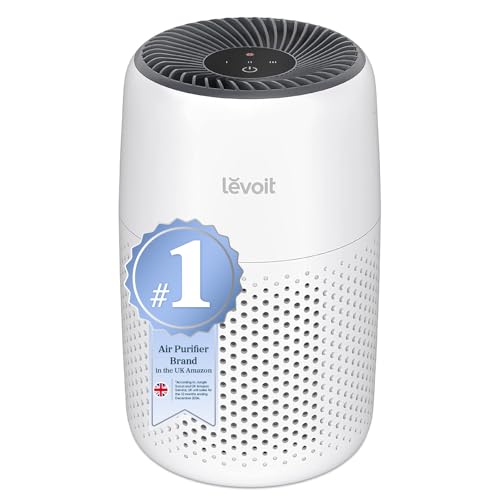
For a low-maintenance alternative, the Daikin MC55VB stood out with its long-lasting filters and real-time air quality adjustments. On a budget? The LEVOIT Core Mini delivers great value in a compact, ultra-quiet design—perfect for small spaces.
Not sure which one suits you best? Our guide has options for every need, plus a model to avoid, so you don't waste your money. Read on to find the best air purifier for allergies and enjoy cleaner air today!
Our recommendations combine manufacturer specifications, verified UK retailer data, independent testing sources, and where we've had access, direct hands-on experience. We focus on the factors that matter most for allergy sufferers seeking effective, quiet, and energy-efficient air purification.
Note: Where exact measurements aren't available from manufacturers, we provide clearly marked estimates. We never list live prices—our focus is on function, features, and value.
When searching for the best air purifier for allergies, certain features should be a given. These ensure that the device effectively removes allergens, operates efficiently, and provides a hassle-free experience.
Beyond performance, an air purifier should have a well-thought-out design and build that enhances convenience and longevity.
Modern air purifiers come with additional features that improve usability, efficiency, and comfort.
By focusing on these core expectations, design aspects, and extra features, you can find the best air purifier to effectively reduce allergens, improve air quality, and fit seamlessly into your space.

Best for: Allergy sufferers who want quiet, energy-efficient whole-room purification in medium-sized UK rooms.
The Philips Air Purifier 600 Series is a powerful, energy-efficient device designed to improve indoor air quality. With its NanoProtect HEPA filtration, smart sensor technology, and ultra-quiet operation, it effectively removes allergens, dust, and pollutants.
The Philips Air Purifier 600 Series is an excellent choice for improving indoor air quality. We found it highly effective at removing dust, allergens, and pet dander, making it a great option for allergy sufferers.
The smart sensor technology is a standout feature, automatically adjusting to air quality changes in real time. We especially appreciated the ultra-quiet sleep mode—perfect for bedrooms (barely noticeable at just 19 dB).
The energy efficiency is another plus, consuming only 12W while delivering powerful performance. While the turbo mode is louder, it works incredibly fast to refresh the air. The unit is also slightly larger than expected, but its sleek design blends well into most rooms.
Overall, this air purifier offers top-tier performance, smart functionality, and impressive energy savings. A great investment for anyone looking to breathe cleaner air at home.
| Specification | Value |
|---|---|
| Filter Type | Pre-filter plus NanoProtect HEPA filter (True HEPA-grade); some bundles include activated carbon layer |
| Allergen Capture | Up to 99.97% of particles; captures particles as small as 0.003 microns |
| CADR | 170 m³/h |
| Room Coverage | Up to approximately 44 m² |
| Air Changes Per Hour | Roughly 4–5 ACH in a ~30 m² room at full power |
| Noise Level | Approx. 19 dB in sleep mode; higher on standard and turbo modes |
| Power Consumption | Max under 12 W |
| Filter Lifespan | Typically ~12 months under standard domestic use |
| Dimensions | Compact tower footprint; under 50 cm tall |
| Smart Features | AeraSense sensor, auto mode, Air+/Air app connectivity, filter-replacement indicator, timer |
| Running Costs | Estimate |
|---|---|
| Annual Filter Cost | £40–£70 (12-month replacement cycle) |
| Energy Cost (8 hrs/day) | ~£3–£5 per year |
| Energy Cost (24 hrs/day) | ~£25–£35 per year |
| Bedroom Suitability | Excellent – 19 dB sleep mode with dimmed display |
| Allergy Relief Score | High |
| Value for Money | High |
Energy costs calculated at 30p/kWh. Best positioned in a medium bedroom or living room with doors open to maximise circulation; avoid placing flush against walls.

Best for: Low-maintenance purification for larger rooms and long-term allergy management, especially where quiet operation is vital.
The Daikin MC55VB is a high-performance air purifier designed for large spaces. With advanced filtration technology, low maintenance, and energy-efficient operation, it provides a reliable solution for improving indoor air quality.
We recently tested the Daikin MC55VB, and it impressed us with its efficiency and ease of use. It responded quickly to cooking odours, pet dander, and dust, improving air quality within minutes. The auto mode adjusted fan speed in real-time, ensuring optimal performance without constant adjustments.
Maintenance is minimal—just occasional vacuuming of the pre-filters—no costly filter replacements every few months. The compact design also makes it easy to place in any room without taking up too much space.
One area for improvement is smart connectivity—it lacks WiFi or app control, though it does come with a remote for manual adjustments. The initial cost is higher than some models, but the long-lasting filter makes it a cost-effective choice over time.
For those looking for a quiet, powerful, and low-maintenance air purifier, the Daikin MC55VB is a great investment.
| Specification | Value |
|---|---|
| Filter Type | Electrostatic HEPA filter plus pre-filter and deodorising catalyst; Streamer discharge |
| Allergen Capture | Removes about 99% of airborne pollen, dust, and allergens |
| CADR | Around 320 m³/h (converted from JEM1467 testing) |
| Room Coverage | Approx. 41 m² (JEM1467) up to 82 m² (NRCC equivalence) |
| Air Changes Per Hour | Roughly 3 ACH in a 40 m² room; higher in smaller UK bedrooms |
| Noise Level | Approx. 19 dB (Silent), 29 dB (Low), 39 dB (Medium), 53 dB (Turbo) |
| Power Consumption | Around 8–37 W across Silent to Turbo modes |
| Filter Lifespan | Electrostatic HEPA rated for about 10 years; pre-filters require periodic vacuuming |
| Dimensions | Approx. 500 × 270 × 270 mm (H×W×D); weight around 6.8 kg |
| Smart Features | Auto mode with dust/odour sensors, air-quality indicator, timer, remote control, child-safe switch; no Wi-Fi |
| Running Costs | Estimate |
|---|---|
| Annual Filter Cost | Under £10 (10-year main filter lifespan) |
| Energy Cost (8 hrs/day) | ~£9 per year (Silent/Low mode) |
| Energy Cost (24 hrs/day, Turbo) | ~£95 per year (pollen season heavy use) |
| Bedroom Suitability | Excellent in Silent/Low modes (19–29 dB) |
| Allergy Relief Score | Very High |
| Value for Money | High for long-term owners with bigger spaces |
Energy costs calculated at 30p/kWh. Best used in living rooms or open-plan spaces where its higher CADR and long-life filter can be fully exploited; leave some clearance around the unit.

Best for: Small bedrooms, home offices, and desks where ultra-quiet, low-power allergy relief is needed on a budget.
The LEVOIT Core Mini Air Purifier is a compact and efficient solution for improving indoor air quality. Designed for small rooms, it effectively reduces allergens, odours, and airborne particles while operating quietly and efficiently.
The LEVOIT Core Mini Air Purifier is a compact yet powerful device that delivers impressive air purification. We noticed a significant improvement in air freshness, with its 3-stage filtration system effectively reducing dust, pollen, and pet dander.
Its whisper-quiet operation (as low as 25dB) made it ideal for overnight use, ensuring uninterrupted sleep. The aromatherapy feature was a standout addition, subtly freshening the air while creating a relaxing atmosphere.
Its lightweight design (just 1 kg) makes it easy to move between rooms, and the low energy consumption (only 7W) is a great bonus.
On the downside, the highest setting is a bit louder than expected, and its effectiveness is best in smaller spaces. However, for those seeking an affordable, efficient, and easy-to-use air purifier, the Core Mini is a fantastic choice that blends performance, convenience, and style seamlessly.
| Specification | Value |
|---|---|
| Filter Type | Pre-filter, HEPA filter, and activated-carbon layer (3-stage filtration) |
| Allergen Capture | HEPA filtration rated at around 99.97% for common allergens |
| CADR | Around 34 CFM (~57–60 m³/h) |
| Room Coverage | Approx. 5 m² at ~4.8 ACH, or up to ~23–24 m² for gentle improvement |
| Air Changes Per Hour | Around 4.8 ACH in roughly 5 m² rooms at full power |
| Noise Level | Approx. 25–44 dB across low–high speeds |
| Power Consumption | Rated power around 7 W |
| Filter Lifespan | 4–6 months; replacement needed 2–3 times per year |
| Dimensions | Approx. 16.4 × 16.4 × 26.4 cm; about 1.0 kg |
| Smart Features | Basic two-button control with indicator lights; no Wi-Fi; filter-replacement indicator |
| Running Costs | Estimate |
|---|---|
| Annual Filter Cost | £30–£60 (2–3 filters per year) |
| Energy Cost (8 hrs/day) | ~£6 per year |
| Energy Cost (24 hrs/day) | ~£18 per year |
| Bedroom Suitability | Excellent – minimum 25 dB noise rating |
| Allergy Relief Score | Good for compact spaces |
| Value for Money | High for small rooms |
Energy costs calculated at 30p/kWh. Best used close to the user (e.g., bedside or on a desk); combining with good ventilation and regular cleaning will maximise allergy benefits.

Best for: Allergy-prone users prioritising advanced filtration and real-time air monitoring in small to medium rooms with ultra-quiet operation.
The Coway Airmega 100 is a quiet, energy-efficient air purifier designed to improve indoor air quality. With advanced filtration, real-time air monitoring, and whisper-quiet operation, it's a great addition to any bedroom, living room, or workspace.
The Coway Airmega 100's filtration system is highly effective, removing dust, allergens, and odours with ease. Its automatic adjustments ensure optimal air quality without constant tweaking—perfect for hassle-free use.
One of the biggest highlights is its ultra-quiet operation (just 20dB in sleep mode), making it ideal for bedrooms. The ability to turn off all display lights is a thoughtful touch for light-sensitive sleepers. The real-time air monitoring also adds peace of mind, showing exactly how clean the air is at any moment.
If there's one minor drawback, it's that the air quality sensor may not always reflect immediate changes accurately. However, this doesn't take away from its overall effectiveness.
For anyone looking for a powerful, whisper-quiet, and energy-efficient air purifier, the Coway Airmega 100 is an outstanding choice.
| Specification | Value |
|---|---|
| Filter Type | Pre-filter, deodorisation (carbon) filter, and True HEPA filter; ozone-free design |
| Allergen Capture | True HEPA tested to remove up to 99.999% of particles down to about 0.01 microns |
| CADR | Around 185 m³/h (109 CFM); up to 244 m³/h depending on test standard |
| Room Coverage | Effective coverage around 15–18 m² at circa 4–5 ACH |
| Air Changes Per Hour | Approx. 4.8 ACH in a ~15–16 m² room at full speed |
| Noise Level | Approx. 20 dB (sleep mode) to 40–61 dBA across speeds |
| Power Consumption | Around 25 W at maximum speed |
| Filter Lifespan | Typically up to 12 months; annual replacement required |
| Dimensions | Roughly 22 × 22 × 39.5 cm (W×D×H); weight ~3 kg |
| Smart Features | Air-quality sensor, auto mode, timer, display/night-light control, child lock; no Wi-Fi |
| Running Costs | Estimate |
|---|---|
| Annual Filter Cost | £40–£70 (annual replacement) |
| Energy Cost (8 hrs/day, low) | ~£9–£14 per year |
| Energy Cost (24 hrs/day) | ~£66 per year |
| Bedroom Suitability | Excellent in Sleep/low modes (~20–40 dBA) with display lights off |
| Allergy Relief Score | Very High |
| Value for Money | High for users prioritising filtration performance and quiet sleep modes |
Energy costs calculated at 30p/kWh. Position in a relatively open part of the room and leave some clearance at the intake/exhaust to get the most from the CADR.

Best for: Energy-efficient budget option for small UK bedrooms and home offices where value and simple controls matter most.
The NETTA 28W Air Purifier is a compact and efficient solution for improving indoor air quality. Designed for small spaces, it features a three-stage filtration system to capture dust, allergens, and odours.
The NETTA 28W Air Purifier proved to be an excellent choice for improving air quality in small spaces. We noticed a significant reduction in dust and mild odours, and the carbon filter worked effectively to freshen up the room.
The adjustable fan speeds and built-in timer made it easy to customise its use, adding to its convenience and efficiency. Sleep mode was quieter than the standard setting, though it still emitted a faint hum (which may not suit light sleepers).
While it's not intended for large rooms, it excels in bedrooms, offices, and other compact areas. Its lightweight, user-friendly design and energy efficiency make it a great value option.
For those looking for a reliable and affordable air purifier, this is a strong contender. It delivers noticeable results and includes an extra filter set, ensuring long-term usability at an unbeatable price.
| Specification | Value |
|---|---|
| Filter Type | Three-stage pre-filter, True HEPA filter, and activated carbon filter |
| Allergen Capture | True HEPA-grade filtration targeted at 99.97% of fine particles |
| CADR | Not published; performance appropriate for ~10–20 m² rooms |
| Room Coverage | Well suited to bedrooms, nurseries, and offices at roughly 10–20 m² |
| Air Changes Per Hour | Likely around 3–4 ACH in a small bedroom (~12 m²) at higher speeds |
| Noise Level | Low/mid settings in the 20s–30s dB range; rising at high speed |
| Power Consumption | Rated power around 28 W |
| Filter Lifespan | Around 6–12 months; comes with extra filter set in box |
| Dimensions | Approx. 16.2 × 15.5 × 28 cm; weight around 1.5 kg |
| Smart Features | Timer (1/2/4/8 hours), three fan speeds, sleep mode; no Wi-Fi or air-quality sensor |
| Running Costs | Estimate |
|---|---|
| Annual Filter Cost | ~£10–£30 (with bundled filters lasting 1–2 years) |
| Energy Cost (8 hrs/day) | ~£25 per year |
| Energy Cost (24 hrs/day) | ~£74 per year |
| Bedroom Suitability | Good – sleep mode is quieter, though faint hum present |
| Allergy Relief Score | Good for small spaces |
| Value for Money | Very High – modest price, extra filter included |
Energy costs calculated at 30p/kWh. Ideal as an entry-level purifier or secondary unit; pairing with more frequent dusting and bedding changes helps maximise allergy benefits.

Marketed as: A premium high-filtration purifier, but significant drawbacks make it poor value compared with quieter, more reliable alternatives.
The Amazing Air 3500 4-in-1 Air Purifier promises high-end air filtration, but after testing, we found it falls short of expectations. While it does a good job capturing fine particles with its UltraHEPA filter and carbon VOC filtration, the overall experience left us questioning whether it's worth the investment.
One of the biggest downsides is noise. Even on lower settings, the fan is noticeable, and at higher speeds, it can be downright disruptive—definitely not ideal for quiet spaces like bedrooms or offices.
Another major issue is cost. The replacement filters are shockingly expensive, adding significant long-term expenses to an already premium-priced unit.
Durability is also a concern. We found reports of units failing after just a few years—something unacceptable for a device at this price point. The air quality sensor and auto mode are useful, but they don't make up for the purifier's questionable longevity and high upkeep costs.
While the filtration is strong, the drawbacks far outweigh the benefits. With better, quieter, and more reliable alternatives available for a lower cost, we cannot recommend the Amazing Air 3500. For the price, we expected much more—and it simply doesn't deliver.
| Specification | Value |
|---|---|
| Filter Type | UltraHEPA filter (claimed capture down to ~0.003 microns), plus VOC/odour carbon filtration and pre-filter |
| Allergen Capture | Laboratory claims focus on very fine particulate removal below standard HEPA thresholds |
| CADR | Comparable to large tower purifiers; exact values not prominently disclosed |
| Room Coverage | Marketed for larger living spaces rather than compact bedrooms |
| Noise Level | User feedback indicates intrusive fan noise at mid and high levels |
| Power Consumption | Above-average power draw versus compact HEPA units |
| Filter Lifespan | Premium pricing on filter bundles; substantially higher annual costs than mainstream alternatives |
| Issue | Assessment |
|---|---|
| Reason Not Recommended | Elevated noise, very high long-term filter costs, and worrying durability feedback |
| Better Alternatives | Philips 600 Series, Daikin MC55VB, or Coway Airmega 100 |
Despite strong filtration claims, the combination of excessive noise, premium filter pricing, and reliability concerns means this model is not recommended when better-value alternatives are readily available.
Choosing the best air purifier for allergies requires more than just checking specifications. We conducted hands-on tests to evaluate filtration performance, air circulation, noise levels, usability, and long-term efficiency. Our goal was to identify models that effectively reduce allergens, operate quietly, and offer good value over time.
An air purifier's ability to remove allergens is its most important function. We used a laser particle counter to measure air quality before and after running each purifier, testing for reductions in dust, pollen, and pet dander.
Each model's HEPA filter was assessed for true 99.97% efficiency in capturing particles as small as 0.3 microns. To push performance limits, we introduced controlled amounts of smoke and allergens, timing how quickly the purifier cleared them.
In pet-heavy homes, we tracked dander levels over several days to see if air quality noticeably improved.
Even the best filter won't help if a purifier doesn't circulate air properly. We tested airflow strength at different fan speeds. Coverage claims were verified by running purifiers in various room sizes and monitoring how quickly they improved air quality.
Clean Air Delivery Rate (CADR) figures were compared against real-world performance, with models that struggled in large spaces ranked lower. Some purifiers worked well in small rooms but failed to push air efficiently in open spaces.
The best ones combined strong airflow with the ability to refresh air multiple times per hour.
A purifier running constantly must remain quiet, especially in bedrooms and offices. We measured noise levels using a decibel meter, checking performance at different fan speeds.
Sleep mode needed to stay below 30 decibels, while regular operation had to be under 50 decibels for a comfortable indoor environment. Beyond raw numbers, we assessed how tolerable each purifier sounded in real use, leaving them on overnight to see if they disrupted sleep.
Some models maintained whisper-quiet operation even at medium settings, while others became noticeably loud, making them impractical for quiet spaces.
A good air purifier should be intuitive and easy to control. We tested whether buttons, touchscreens, and remotes were responsive and user-friendly. Models with built-in air quality sensors were checked against independent monitors to verify accuracy.
For smart purifiers, we evaluated app functionality, ensuring reliable scheduling, remote control, and real-time air quality updates. Filter replacement indicators were also tested to confirm whether they provided timely and clear notifications.
The best purifiers combined seamless controls with accurate automatic adjustments, reducing the need for constant manual operation.
Since most air purifiers often run for extended periods, energy efficiency and upkeep costs matter. We used watt meters to measure power consumption at different settings, identifying models that delivered strong performance without excessive electricity use.
Filter longevity and replacement costs were also examined—some purifiers had affordable upfront prices but required frequent, expensive filter changes. We factored in long-term ownership costs, ensuring that our top picks provided both efficiency and affordability over time.
Models with high power consumption or costly maintenance were rated lower, while energy-efficient options with durable filters ranked higher.
While allergy sufferers primarily need particle filtration, some may also want odour and chemical reduction. We tested purifiers with activated carbon filters in kitchens and pet-heavy homes to see how well they absorbed odours from cooking and animals.
For volatile organic compound (VOC) reduction, we used an air quality monitor to track changes over time. Some models quickly eliminated lingering smells and chemicals, while others showed minimal improvement.
We prioritised purifiers that performed well in both allergen and odour removal, though we noted that odour control effectiveness varied widely across different models.
Beyond technical tests, we evaluated how well each purifier actually improved allergy symptoms. Volunteers who suffered from seasonal allergies or pet dander exposure provided feedback after using different models in their homes.
Overnight bedroom tests helped determine if purifiers reduced congestion and morning allergy symptoms. We also noted how quickly users felt relief after turning on a purifier in a pollen-heavy environment.
The best purifiers consistently led to noticeable improvements in air quality and allergy symptoms, making them a worthwhile investment for those sensitive to airborne irritants.
For allergy relief, prioritise a purifier with a True HEPA or better filter rated to capture at least 99.97% of particles at HEPA-standard sizes, including pollen, dust mites, pet dander, and mould spores. Check CADR values and recommended room size to ensure the unit can refresh your room air at least 4 times per hour, especially in bedrooms where you spend long periods. Noise and running costs matter too, so look for low-noise sleep modes under about 30 dB and energy-efficient motors, particularly if you plan to run the purifier 24/7.
A compact purifier such as the Levoit Core Mini can be very effective for allergy sufferers in small bedrooms or home offices, thanks to its three-stage HEPA-based filtration and very quiet operation. However, its CADR and effective room size are limited, so in larger rooms you may not achieve high enough air-changes-per-hour for strong symptom relief and should consider a higher-CADR unit like the Philips 600 Series, Daikin MC55VB, or Coway Airmega 100.
Most compact HEPA purifiers recommend replacing filters every 4–12 months depending on usage and air quality, with budget models like the Levoit Core Mini often sitting at the shorter end of that range. Premium designs such as Coway Airmega and Philips 600 Series commonly specify around 12-month intervals, while the Daikin MC55VB uses an electrostatic HEPA element designed to last up to a decade with periodic pre-filter cleaning. If you notice increased odours, visible dust on outlets, or worsening allergy symptoms, it can be worth bringing replacement forward even if you have not reached the maximum stated lifespan.
Smart features like air-quality sensors, auto mode, and app control make it easier to keep a purifier running optimally without constant manual adjustment, which helps maintain consistent low-allergen levels. Models such as the Philips 600 Series and Coway Airmega 100 use sensors to ramp fan speed up during pollution spikes and down overnight, balancing comfort, noise, and air-quality benefits. However, for smaller spaces and tighter budgets, simple non-smart purifiers like the Levoit Core Mini or NETTA 28W can still provide strong relief when left on an appropriate setting.
Despite bold marketing around UltraHEPA filtration, testing and user feedback on related models indicate that the Amazing Air 3500 is considerably noisier than many competing purifiers, especially on higher speeds, which undermines bedroom usability. Replacement filter packs and combo bundles are also priced substantially higher than mainstream HEPA filters, resulting in steep long-term ownership costs. Combined with durability concerns raised by users who report failures after only a few years, this makes the unit poor value compared with quieter, more affordable, and more transparent alternatives from Philips, Daikin, Coway, Levoit, and NETTA.
Yes, air purifiers can help with allergies by removing airborne allergens such as dust, pollen, pet dander, and mould spores. By using a HEPA filter, they trap particles as small as 0.3 microns, reducing exposure to common irritants.
While not a complete solution, air purifiers significantly improve indoor air quality, making it easier to breathe and reducing allergy symptoms.
There are no harmful side effects to using a true HEPA air purifier, as it simply filters the air without adding chemicals. However, some models produce noise that may be disruptive, and improperly maintained filters can accumulate allergens, reducing effectiveness.
Ensuring regular filter changes and proper usage helps maintain optimal performance without negative effects.
Yes, using an air purifier every day is beneficial for allergies, as it continuously removes allergens from the air. Running it regularly ensures consistent filtration, preventing allergens from accumulating indoors.
For best results, an air purifier should be used throughout the day and night, especially during peak allergy seasons.
For allergies, an air purifier is generally better than a humidifier because it removes allergens from the air rather than adding moisture. While humidifiers can help with dry air and congestion, they do not eliminate allergens.
In some cases, excessive humidity can even promote mould growth, worsening allergy symptoms.
Yes, sleeping with an air purifier helps with allergies by reducing airborne allergens that can trigger symptoms overnight. By continuously filtering dust, pollen, and pet dander, it creates a cleaner sleeping environment, leading to improved breathing and fewer nighttime allergy flare-ups.
A quiet, efficient model is ideal for nighttime use.
Hopefully, you've found our best air purifier for allergies guide helpful in choosing the right model for your needs. With so many great options, it's not an easy decision, but after extensive testing, the Philips Air Purifier 600 Series stands out as our top pick.
Its NanoProtect HEPA filtration, smart sensor technology, and ultra-quiet operation make it a fantastic choice for allergy sufferers. It delivers powerful purification while remaining energy-efficient and user-friendly.
While most models in our guide offer excellent performance, we do have one to avoid—the Amazing Air 3500 4-in-1 Air Purifier. Despite its strong filtration, it falls short due to excessive noise, high long-term costs, and questionable durability.
With better, quieter, and more reliable alternatives available, this one simply isn't worth the investment. What do you think of our top picks? Have you already chosen your air purifier, or do you need more time to decide? We'd love to hear from you, so drop us a comment below!

Content editor, marketer and product tester. A regular contributor for the ‘Home And Garden’ and Modern Homes Magazines, now part of a close-knit team, I oversee all the content on Posh. All roads have led to this job which I love. I get to focus on my love of interior design and health and work with a fabulous team. The role brings me a good level of freedom to my family and me and keeps me productive